

South African Delegation Visits Obuda University: Building a Strategic Partnership with Stellenbosch University
Recently, a high-level military and research delegation from South Africa’s Stellenbosch University (SU) visited Obuda University with the aim of laying the foundations for a future educational and research partnership. The primary objective of the meeting was to advance closer internationalization efforts between the two institutions, as well as to identify and structure common research areas in military and engineering sciences.
The delegation from the prestigious African university—a prominent research-intensive institution ranked in the top 350 by both QS and Times Higher Education (THE)—was led by Capt (Navy) Graeme Wesley Plint, Deputy Commandant of the Military Academy. Other members of the delegation included senior researcher Lt. Col. Audrey Rozanne Lawrance, as well as Dr. Hendrick Snyders, a researcher and lecturer at the Faculty of Military Science and CEMIS (Center for Military Studies).
The guests were welcomed on behalf of Óbuda University by Prof. Dr. Zoltán Rajnai, Vice-Rector for General Affairs, and Prof. Dr. János Besenyő, Head of the Africa Research Institute at the Bánki Donát Faculty of Mechanical and Safety Engineering. During his online presentation, Péter Balogh introduced the university’s laboratories participating in the NATO DIANA program.
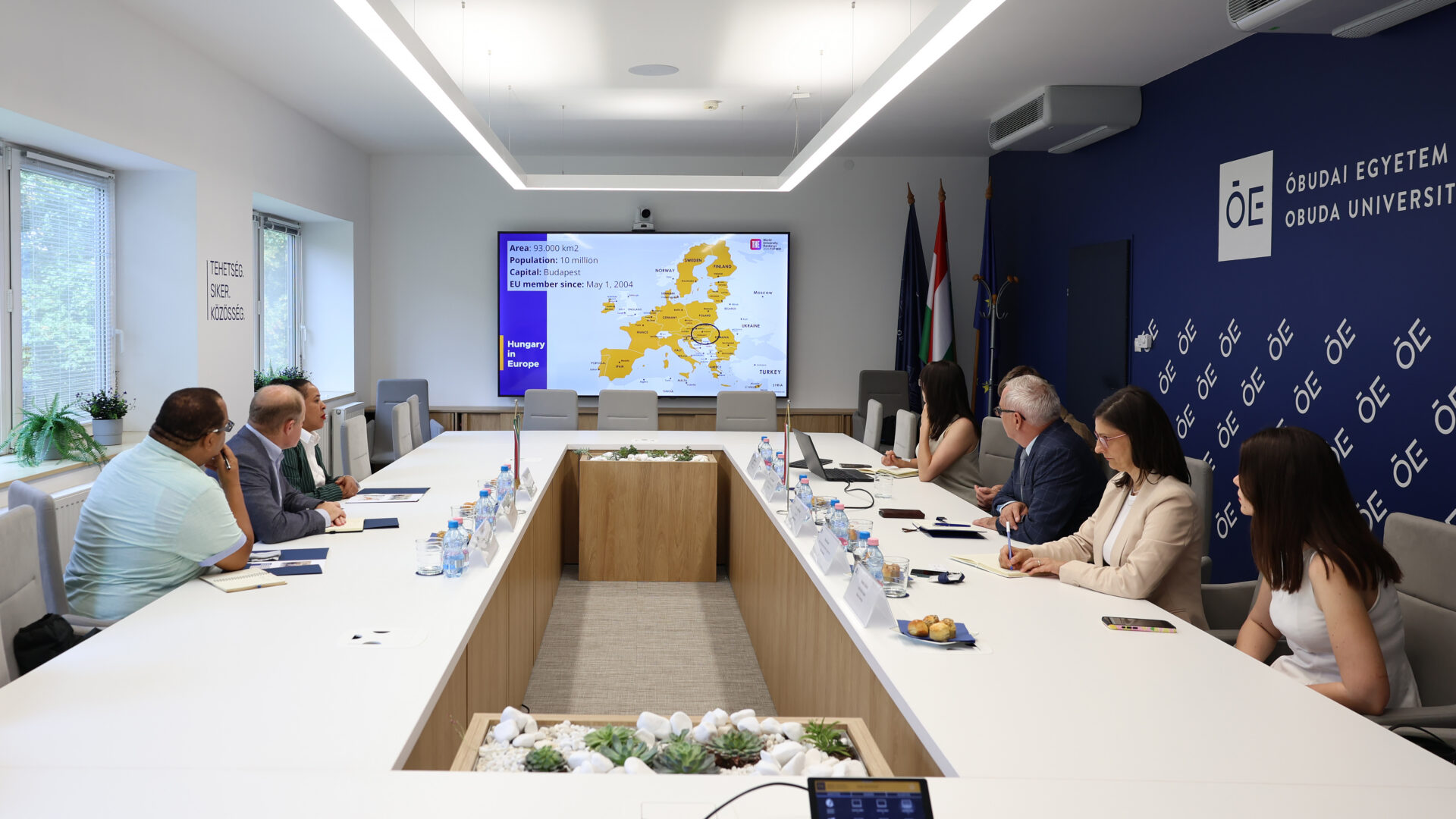
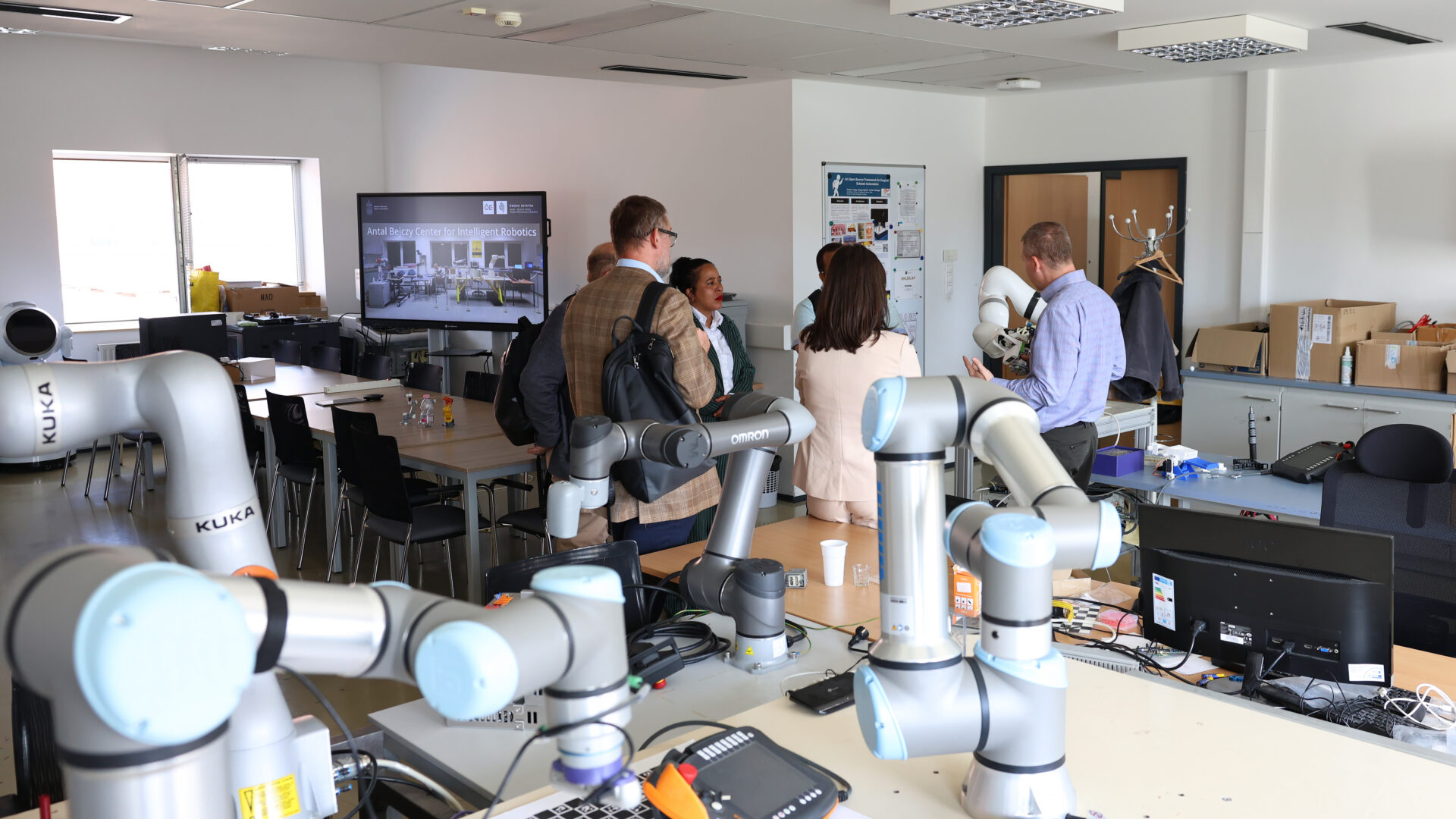
During the visit, the South African guests gained a comprehensive overview of Obuda University’s operations, its standing in international rankings, extensive mobility programs, and doctoral schools. Additionally, led by Prof. Dr. Péter Galambos, they were able to personally tour the university’s modern robotics laboratory. Both parties showed openness to deepening their relationship during the official consultations.
The discussions focused on preparing a Memorandum of Understanding (MoU) with the Faculty of Military Science at Stellenbosch University, which could pave the way for joint research in military sciences, nuclear physics, and engineering and digital technologies. Moving forward, the parties aim to operationalize this cooperation through direct researcher-to-researcher contact, continuous coordination, and joint conference participation, ultimately extending the partnership to the institutional level of both universities.