


Focus on Digital Education and Industrial Cooperation – Chinese Delegation Visits Obuda University
A high-level delegation from the National Center for Educational Technology (NCET) of the Chinese Ministry of Education visited our university to review future partnership opportunities. The primary objective of the meeting was to explore digital education and AI applications in education, as well as to map potential collaboration platforms. Furthermore, the visit aimed to study Óbuda University's successful model of industrial and corporate partnerships, as well as its intellectual property (IP) management.
The Chinese ministerial delegation was led by Li Ping, Director General of the NCET. Other members of the delegation included Qi Tao, Director of Human Resources; Zhang Gang, Director of Development, Planning, and Research; and Deputy Directors Lin Jin and Cheng Xiuli.
The guests were personally welcomed by Prof. Dr. Péter Galambos, Vice-Rector for Innovation, and Dr. habil. Rita Fleiner, Institute Director at the John von Neumann Faculty of Informatics. Prof. Dr. Levente Kovács, Rector, and Marcel Pop, Director General of the International Directorate, participated in the meeting online. The significance of the professional dialogue was underscored by the attendance of Bence Tobak, Education Industry Business Development Manager at Huawei Technologies Hungary Kft.
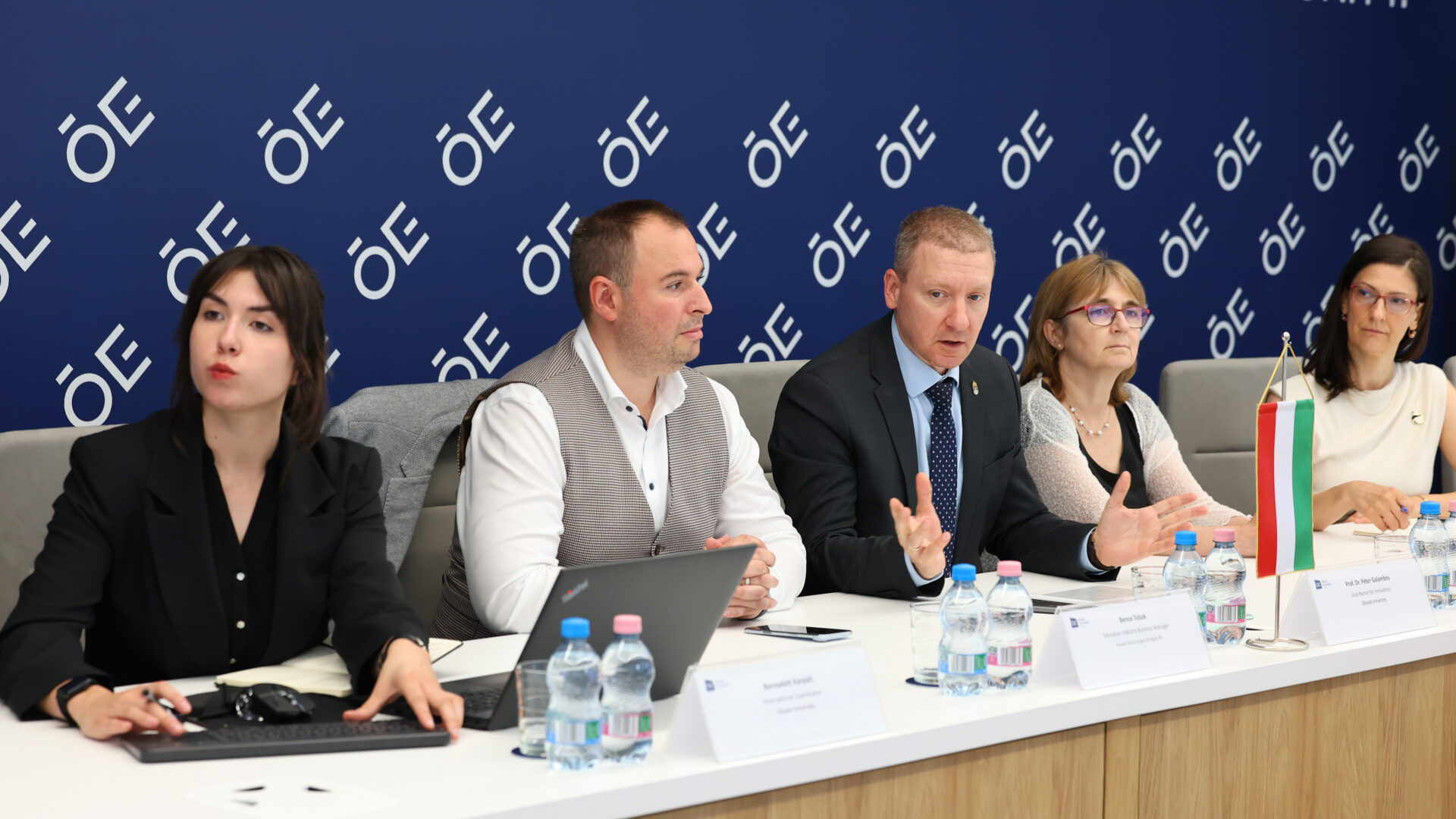
The discussions focused on the operation of university-industry relations, with particular emphasis on attracting talented students and developing joint research and development (R&D) projects. The Chinese side showed keen interest in Óbuda University's IP management practices, which are dominated by joint ownership, collaborative commercialization, and industrial application.
Significant potential for collaboration has also been identified in the field of health research, such as diabetes and oncology. The parties intend to formalize these connections, initially through professor-level networking, followed by the signing of an official Memorandum of Understanding (MoU).
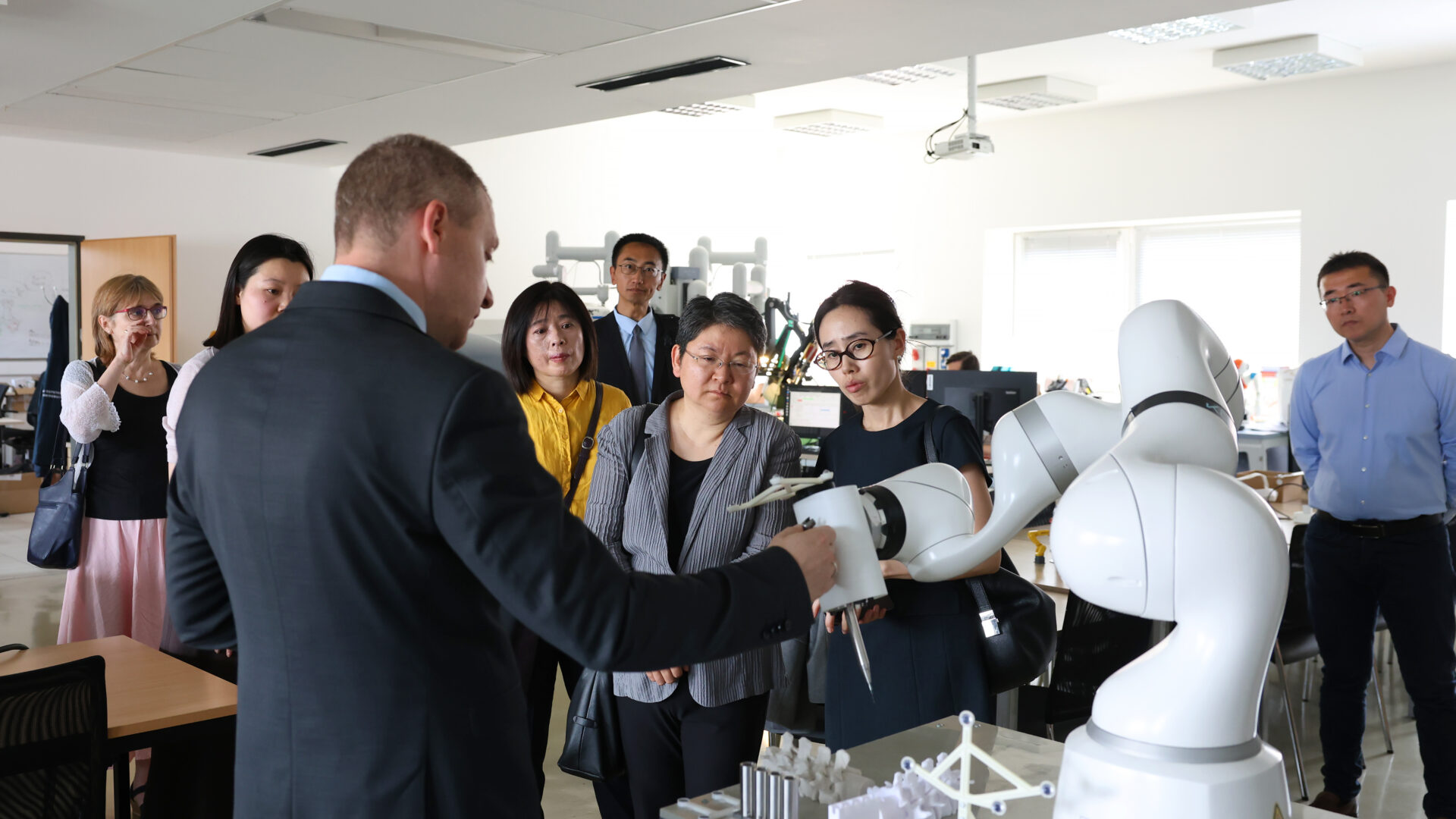
The delegation also visited the university's Antal Bejczy Center for Intelligent Robotics.
Regarding the educational and digital sphere, the Chinese side presented the "Smart Education of China" platform, which covers systems from primary to higher education, including the development of digital museums. Future cooperation could thus extend to content and knowledge sharing, the launch of joint laboratory programs, and student and faculty exchanges. Beyond engineering education and robotics, the parties also see potential for long-term international programs that could even involve African partners.