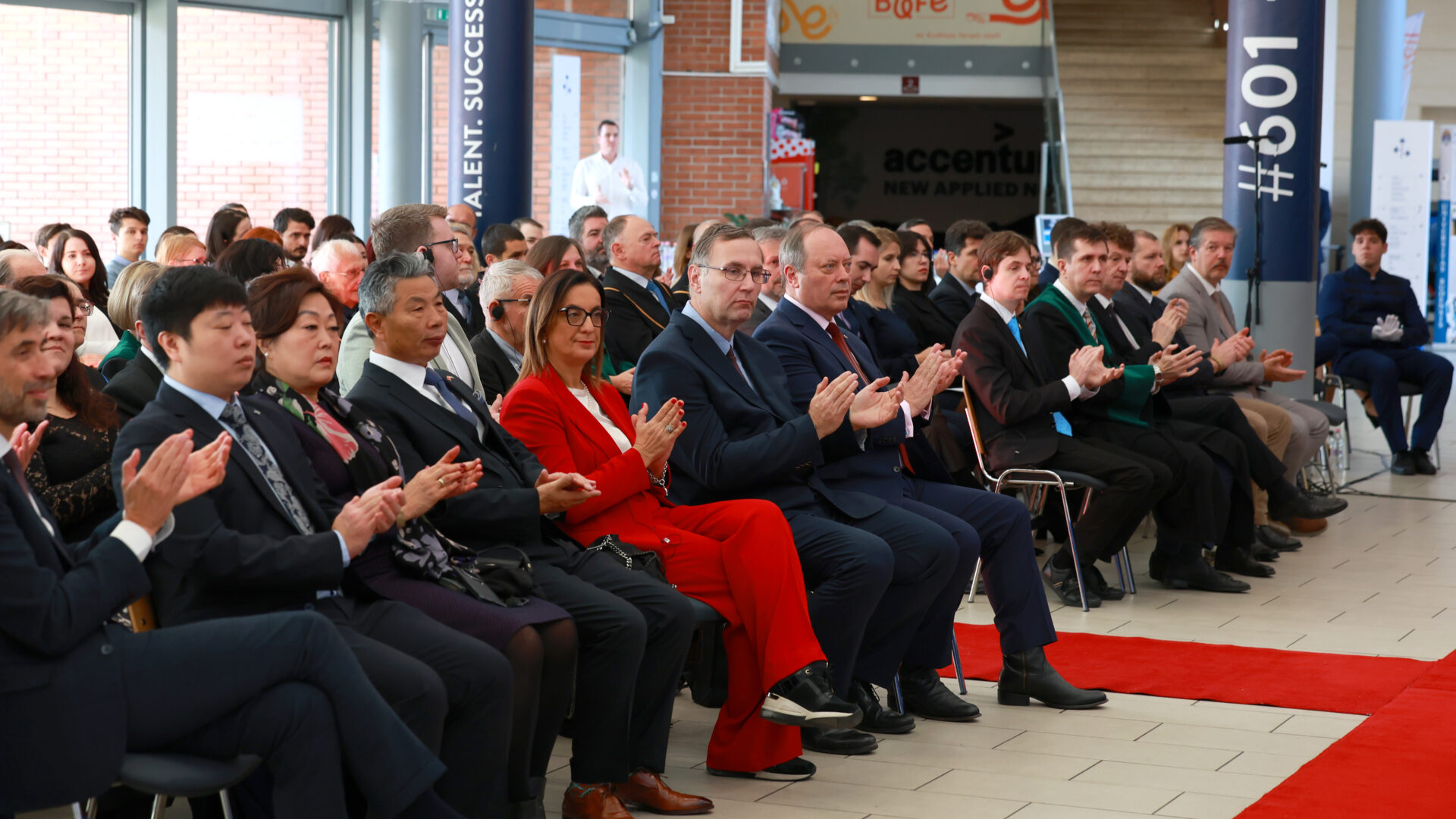


Seventeen Years, New Milestones: Celebrating University Day
We have much to be proud of when looking back on the results of recent years. "Seven years ago, at the beginning of my term as Rector, I set the goal of making Obuda University one of the leading higher education institutions in Central and Eastern Europe, and this plan has been fulfilled! In the regional ranking published by Times Higher Education (THE) just days ago, we placed 7th among nearly 600 higher education institutions in the region," said Prof. Dr. Levente Kovács at the anniversary ceremony held on the occasion of University Day and the Hungarian Science Festival. Welcome speeches were also given at the event by Dr. Gábor Küzdy, Chair of the Board of Trustees of the Rudolf Kalman Foundation for Obuda University, and Dr. Tünde Tőkés, State Secretary's Commissioner at the Ministry of Science and Technology. On this day, the Doctor Honoris Causa, Rudolf Kalman Professor, Honorary Professor and Civis Academicus Honoris Causa titles were awarded.
The Rector emphasized that scientific performance has also improved significantly: while in 2022 the university published 40 papers ranked in the top 10 percent of their field, in 2025 this number reached 168, and our doctoral schools achieved a record of 63 recognitions related to academic degrees. The number of our international partners rose from 87 to 202 in seven years, while we continue to be ranked among the world's top 800 universities. An important achievement this year is that we can once again take part in the Erasmus+ and Horizon Europe programs, providing new research and mobility opportunities for our students and staff. As the first Hungarian university, we joined the international 4GU community of fourth-generation universities, whose approach is closely linked to our investor university strategy.
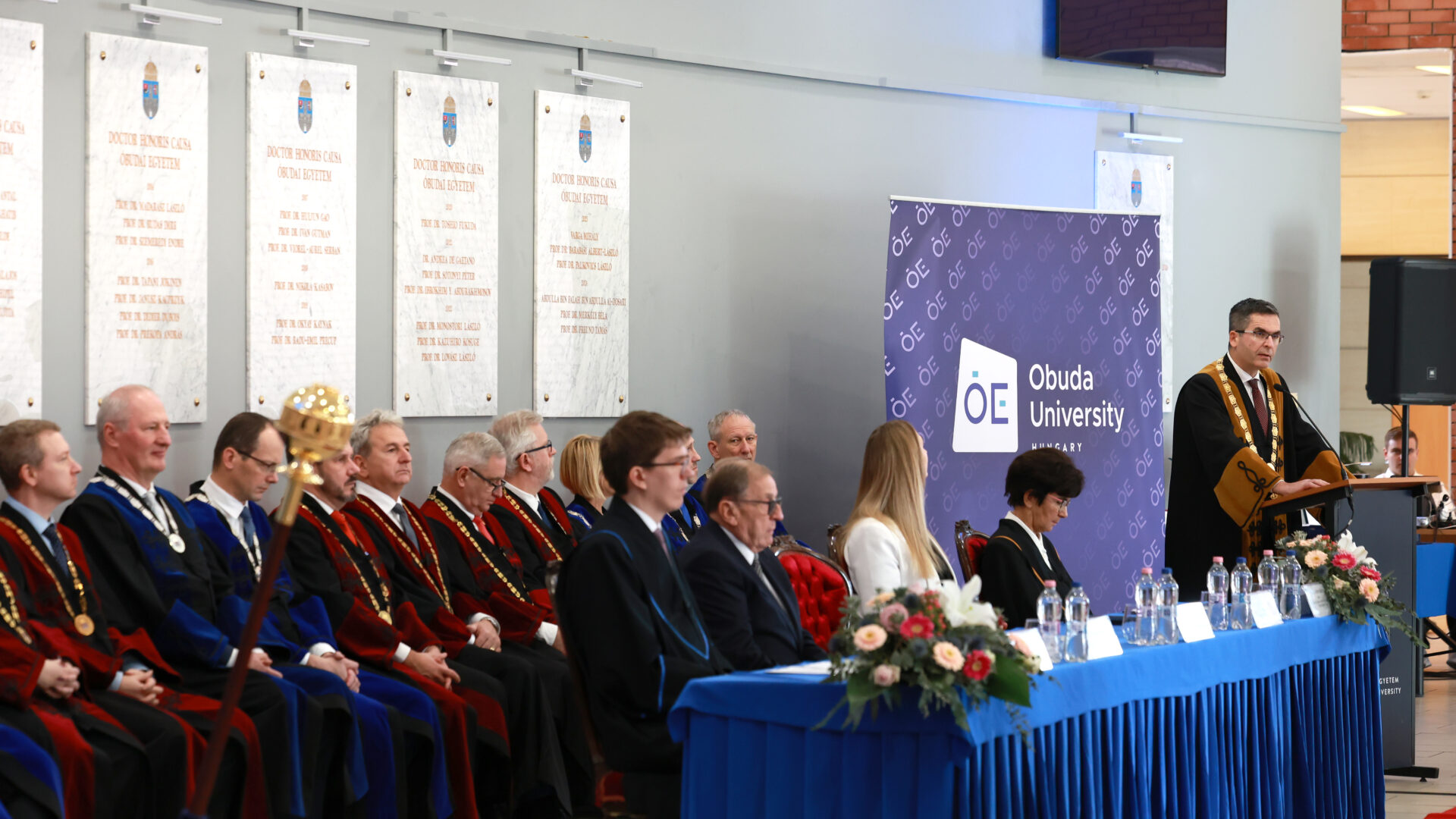
With the AI Campus program, we aim to become an AI-native university within a short time, while we have also achieved significant developments in medical technology, space research and innovation. "Seven years ago, I set a clear goal, and today the results show how much Obuda University has developed. I would like to thank our lecturers, researchers, students, all our staff and our partners for their work over the past years!" added Prof. Dr. Levente Kovács.
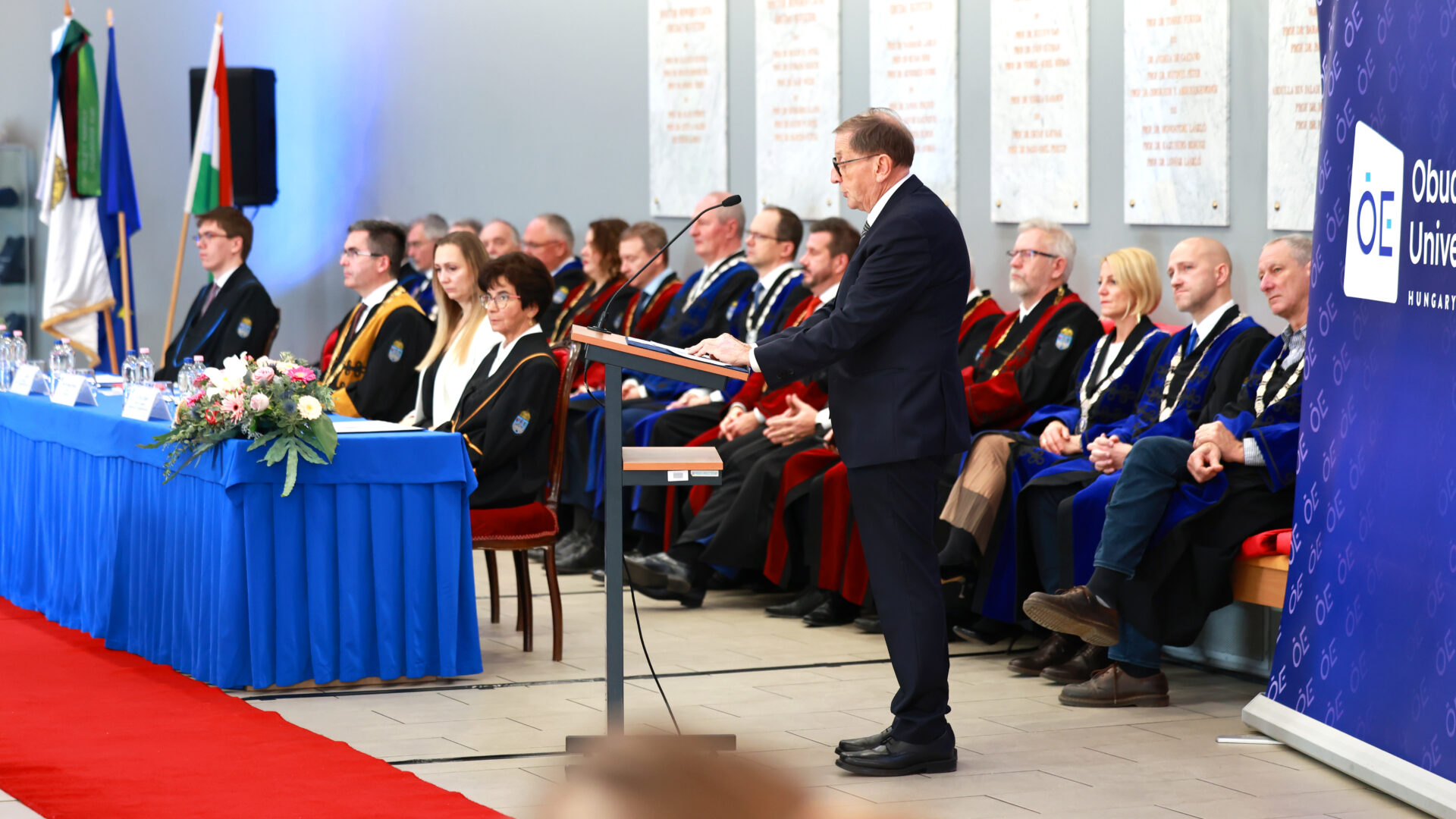
"Let us become the number one engine of applied innovation for market players and businesses! We are standing at the gateway of a new era. Following its future renewal, the university must rise to a new, greater role," emphasized Dr. Gábor Küzdy in his speech. He added that over the past seventeen years, the institution has reached a level of maturity that allows it to act as a guide in the national economy, and through the renewal of the foundation, it must stand its ground in a new era, at the forefront of market innovation. He stressed the importance of taking the initiative, attracting funding, becoming organically integrated into the economic ecosystem, and the mutual reinforcement of educational and scientific excellence and economic success. Finally, he highlighted the value of human resources (researchers, lecturers and students) and the importance of practice-oriented training, mentoring, future-oriented research, internal knowledge sharing and student retention.
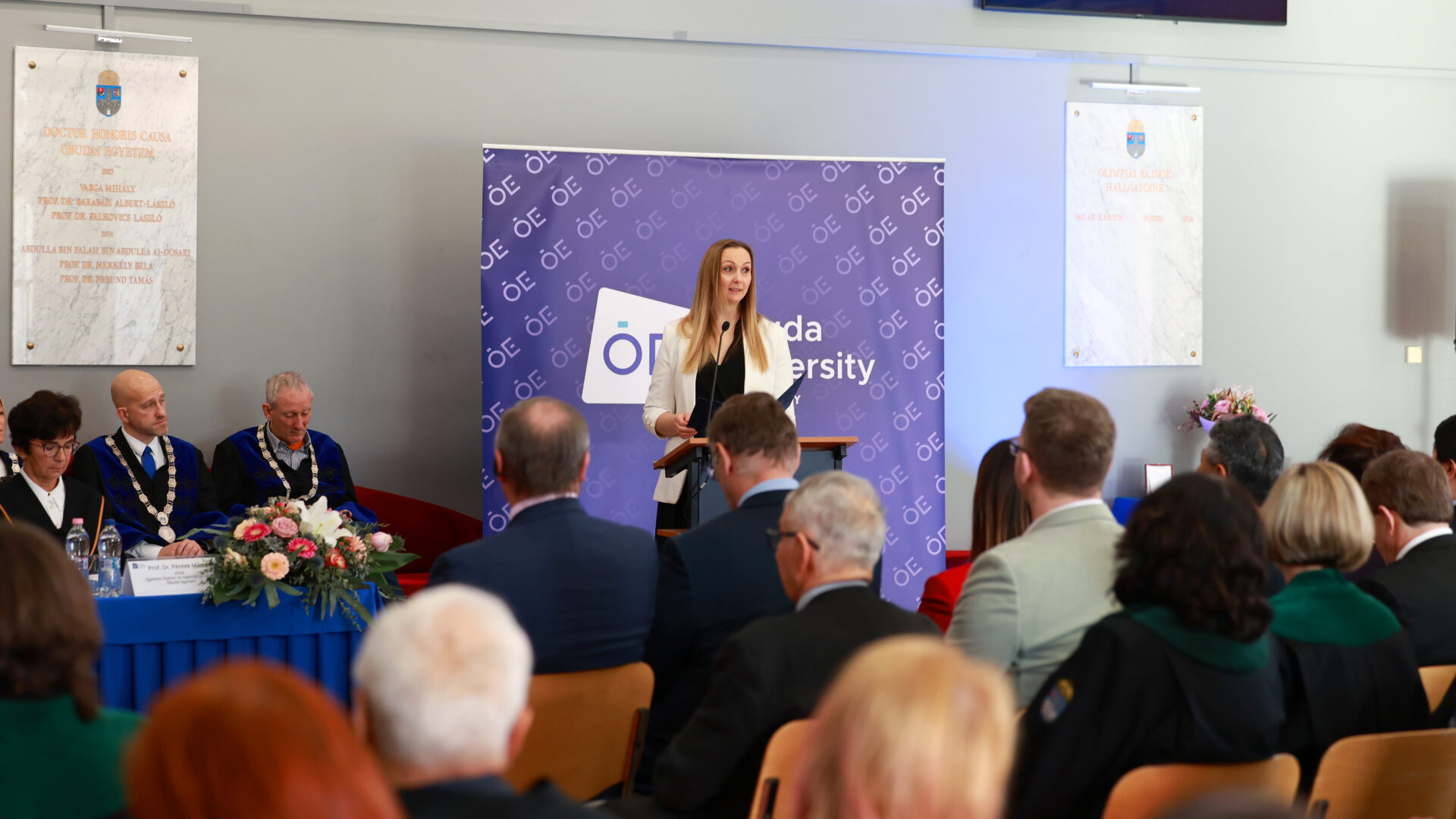
"For the Ministry of Science and Technology, it is of key importance that a scientific and innovation environment can be created in Hungary in which high-quality research, modern education and industrial application develop in a mutually supportive way," emphasized Dr. Tünde Tőkés. As she said, the role of universities in this is indispensable, as they not only prepare the next generations of engineers but also contribute directly to economic development through their research results, corporate partnerships and innovation activities. Obuda University is a particularly good example of how a long-standing tradition of engineering education can be combined with continuous renewal and openness to the technologies of the future. Building on the legacy of the institution's predecessors, a university community has been created whose defining values are practice-oriented education, applicable knowledge and the pursuit of research excellence. Its success is confirmed by numerous international and Hungarian recognitions. These not only reflect the institution's development but also show that high-quality engineering education, scientific research and practical applicability are mutually reinforcing goals. Obuda University's success is also an important message for young people: an engineering career offers solid professional foundations and the opportunity to take part in solving the most exciting scientific and technological challenges.
The following received university awards: Dr. Adrian Stoica, Principal Scientist at NASA's Jet Propulsion Laboratory; Prof. Dr. Sándor Imre, Full Professor at the Budapest University of Technology and Economics; Prof. Dr. Mariagrazia Dotoli, Professor at the Polytechnic University of Bari; Dr. Heping Cao, Managing Owner of Skála Gamma Ltd.; Salvatore Majorana, Director of the Kilometro Rosso innovation district in Italy; Prof. Dr. Rudolf Andoga, Full Professor at the Technical University of Košice; and Dr. Richárd Horváth, Vice-Dean of the Bánki Donát Faculty of Mechanical and Safety Engineering.
Doctor Honoris Causa
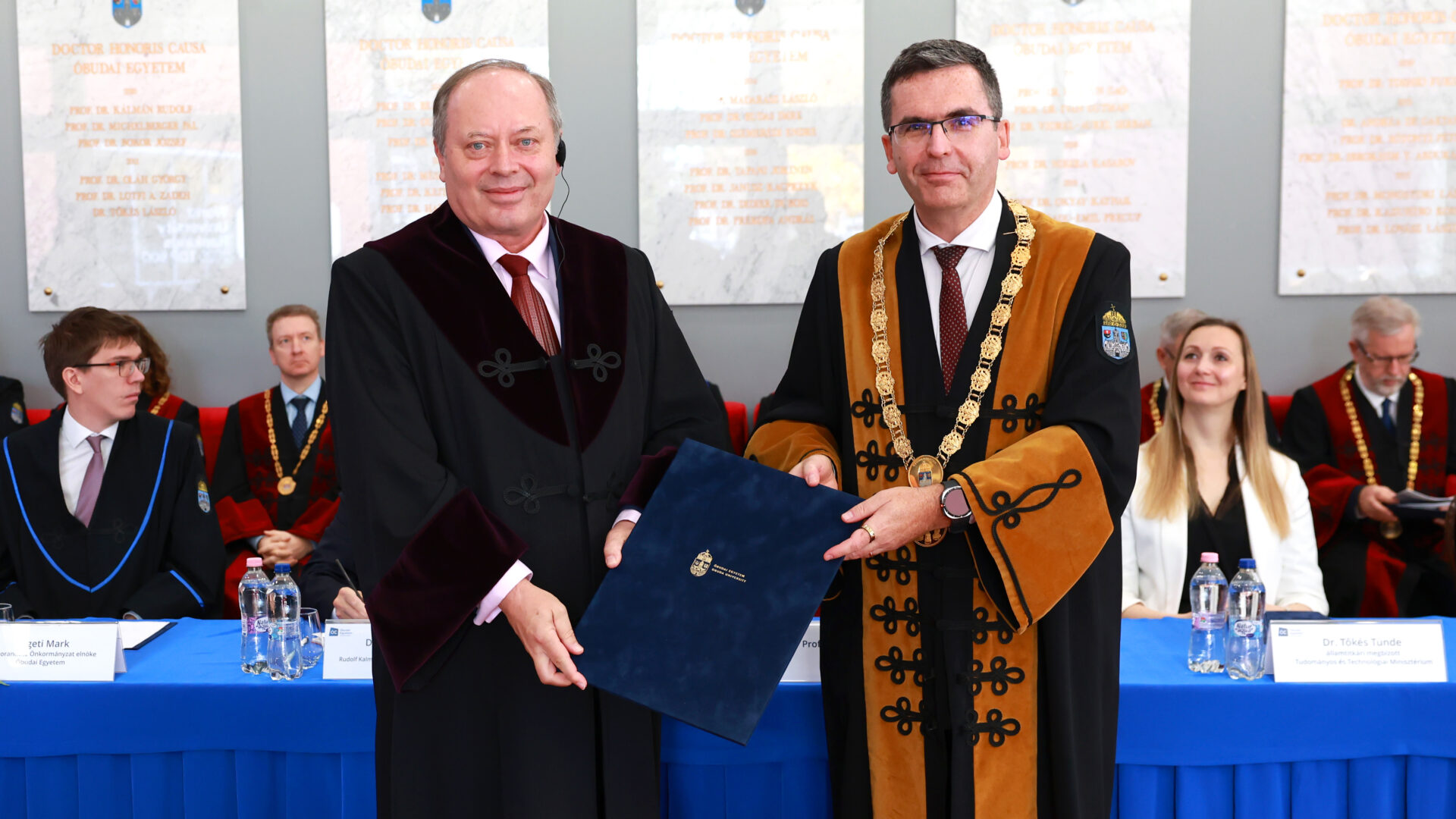
Since 2010, Obuda University has awarded the Doctor Honoris Causa (honorary doctorate) title in recognition of outstanding, internationally acknowledged scientific work pursued over a long period and of activities carried out on behalf of the university. The recipient: Dr. Adrian Stoica, Principal Scientist and Principal Expert at NASA's Jet Propulsion Laboratory (JPL). During more than 25 years at JPL, he has served as principal investigator of numerous research projects funded by NASA and other government agencies. For ten years, he led JPL's Robotic Systems Decision Theory, Estimation and Control Group, and he currently works as a program manager in the Office of Strategic Planning. He joined the IEEE in 1992 and has since taken on volunteer roles in several IEEE societies and organizational units. Over the past two years, he served as President of the IEEE Systems, Man, and Cybernetics Society, and he currently holds the position of Junior Past President. Adrian Stoica is a fellow of NASA's Innovative Advanced Concepts (NIAC) program. He is the founder of three international conferences focusing on adaptive space systems, technologies for improving quality of life, and secure technological solutions. His fields of expertise and research interests are extremely broad, covering, among other things, intelligent machines, robotics, telepresence, human-machine systems and space research. He has maintained close ties with Obuda University for many years, particularly through cooperation in robotics, space technology and security technology research.
Rudolf Kalman Professor Title
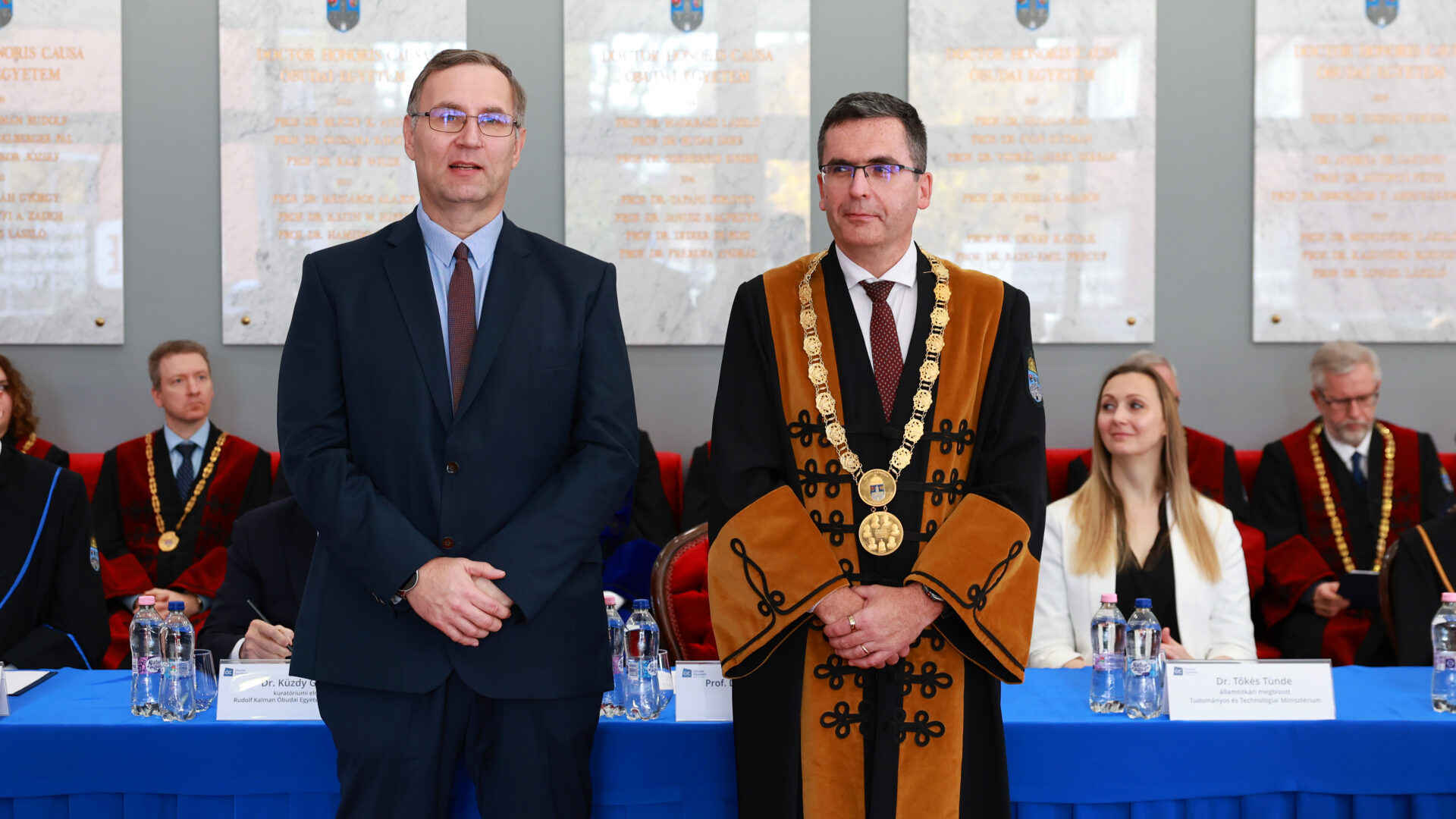
The leadership of the IEEE Hungary Section and the Senate of Obuda University awarded the Rudolf Kalman Professor title to Prof. Dr. Sándor Imre. The Rudolf Kalman Professor title was established by the IEEE Hungary Section and Obuda University in 2017. It may be awarded to outstanding researchers who have played an active role in the IEEE professional community for at least ten years and who, through their work and cooperation, have contributed to the scientific development of Obuda University and the strengthening of its international relations. Prof. Dr. Sándor Imre graduated with excellent results in telecommunications from the Faculty of Electrical Engineering of the Budapest University of Technology. He earned a dr. univ. degree in 1996, a PhD in 1999, and the Doctor of the Hungarian Academy of Sciences degree in 2007. He has been an IEEE Senior Member since 2012, was elected a corresponding member of the Hungarian Academy of Sciences in 2019, and a full member in 2025. He has been a full professor and head of the Department of Networked Systems and Services at BME since 2008, and since 2025 he has been Dean of the Faculty of Electrical Engineering and Informatics. Over his career, he has become an internationally recognized researcher in mobile and wireless telecommunications, as well as quantum informatics and quantum communication, and a defining figure of Hungarian technical and scientific life. As scientific leader of the successfully completed National Laboratory for Quantum Informatics, and through decades of teaching and talent development, he makes an outstanding contribution to the development of Hungarian research and to training the next generation of scientists. The title was awarded to him in recognition of his outstanding scientific results, his activities in the IEEE professional community and his exemplary work in organizing science.
Honorary Professor
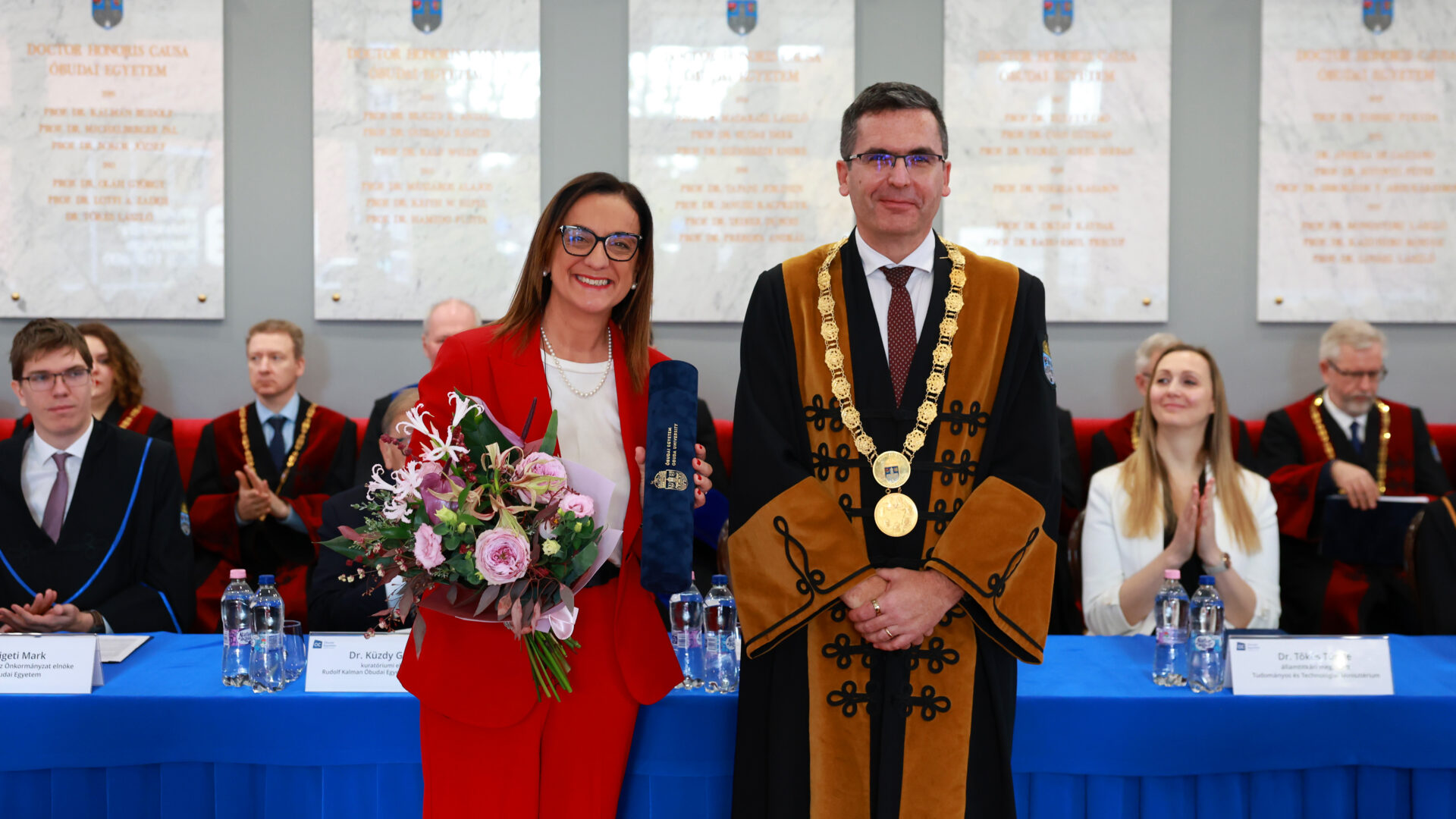
The Senate of Obuda University may award the Honorary Professor title to individuals with outstanding professional achievements who make a significant contribution to raising the standard of the university's teaching and research activities and increasing its international recognition. The Senate of Obuda University awarded the Honorary Professor title to Prof. Dr. Mariagrazia Dotoli, Professor of Systems and Control Engineering at the Department of Electrical and Information Engineering of the Politecnico di Bari. She is also President of SIDRA, the association of Italian automation researchers and university lecturers, and Vice President for Membership and Student Activities of the IEEE Systems, Man and Cybernetics Society. In addition, she is a member of the Administrative Committee of the IEEE Robotics and Automation Society. She plays a prominent role in international scientific life: she has served on the editorial boards of numerous leading IEEE journals, and since 2026 she has been Editor-in-Chief of the IEEE Transactions on Automation Science and Engineering. She is currently the Rector's Delegate for European and International Research at the Politecnico di Bari and coordinator of the Italian doctoral program in autonomous systems. For more than twenty years, she has served as an expert evaluator for the European Commission in international research programs. Her scientific interests include the modeling, control and optimization of industrial and logistics systems, as well as energy and transportation systems. She is the author or co-author of more than 300 scientific publications. She has maintained close professional ties with Obuda University for many years and plays an active role in coordinating the international engineering and scientific community through the IEEE.
Civis Academicus Honoris Causa – Honorary Citizen Award
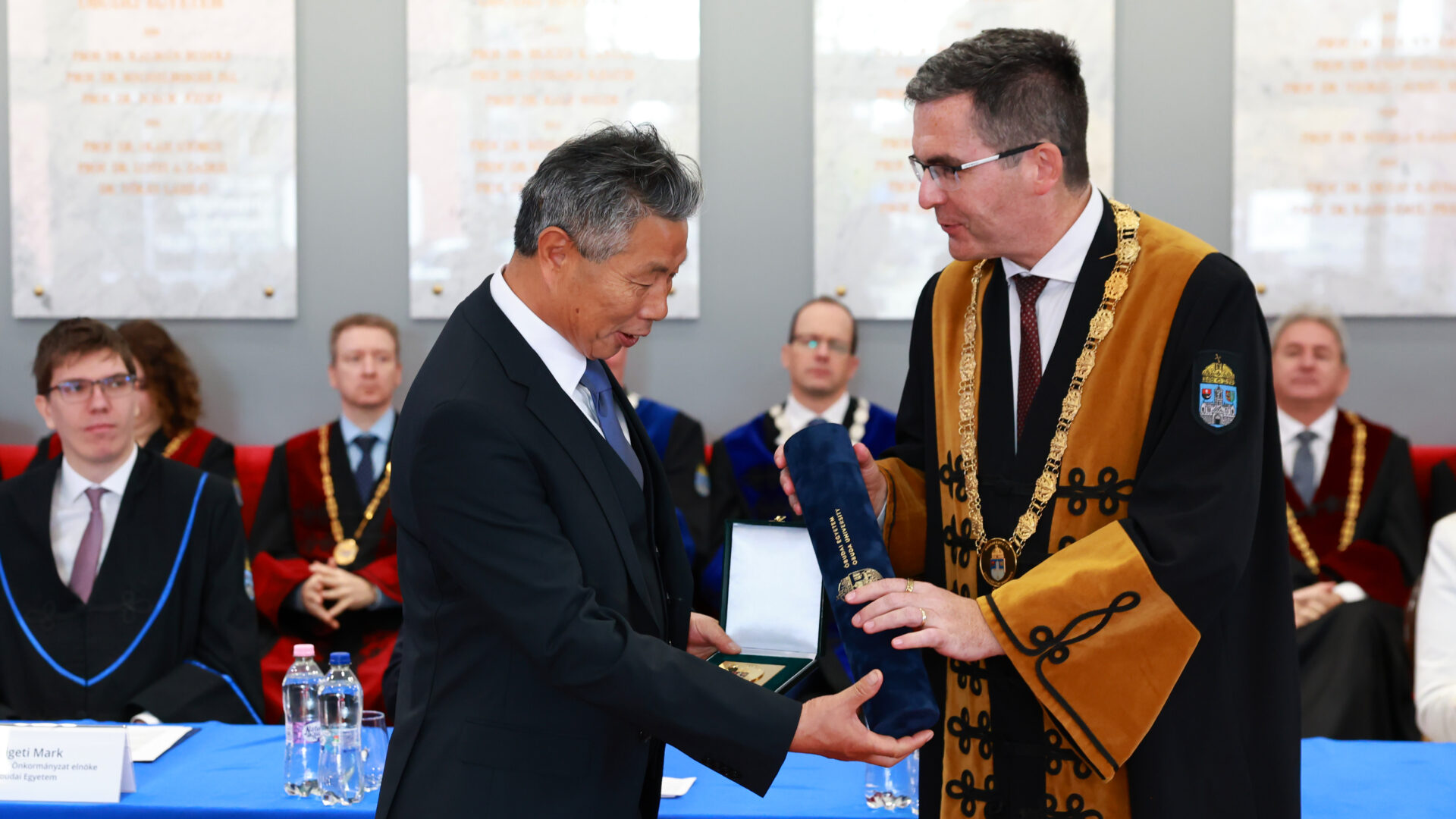
The Senate of Obuda University may award the Civis Academicus Honoris Causa – Honorary Citizen title to individuals and organizations who, through their work on behalf of the university or in cooperation with it, have achieved outstanding results and created something exemplary and lasting. The Senate of Obuda University awarded the Civis Academicus Honoris Causa – Honorary Citizen title to Dr. Heping Cao, who for several decades has played a significant role in developing Hungarian–Chinese scientific, medical, higher education and cultural relations. His work has included promoting relations between universities and researchers, supporting regional cooperation, fostering civil relations and assisting charitable initiatives. His commitment to Hungary and China, his view of the two countries as his shared homeland, and his work to strengthen friendship and cooperation between the two peoples are closely linked to Obuda University's international openness and cooperation goals. His work has contributed significantly to Obuda University building long-term, mutually beneficial relations with Chinese universities and research institutes and enriching its international activities with new joint initiatives. It is especially worth highlighting that he was behind the recent establishment of the SomatoInfra Laboratory, donated to Obuda University, which represents a major step forward in our university's medical technology and MedTech research. In recognition of the above, the Senate of Obuda University awarded Dr. Heping Cao the title of Honorary Citizen of Obuda University for his decades of work in developing Hungarian–Chinese relations, promoting scientific and educational cooperation, strengthening regional and civil ties, and deepening friendship between the two countries.
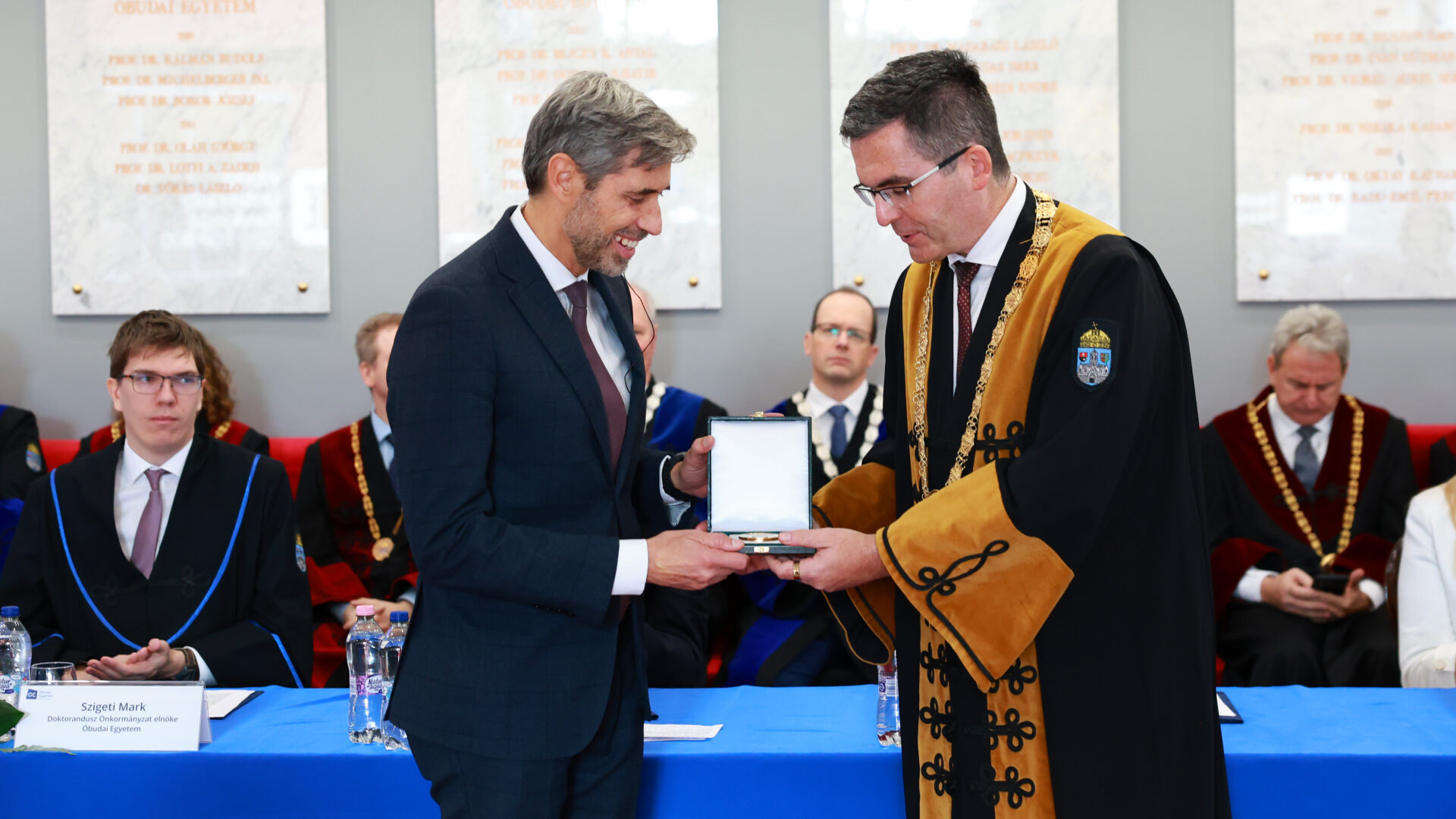
The Civis Academicus Honoris Causa – Honorary Citizen title was also awarded to Salvatore Majorana, Director of the Kilometro Rosso science and technology park in the heart of Lombardy, one of Europe's most industrialized regions. He is responsible for the organization's strategic development, which aims to strengthen technology transfer, encourage open innovation and promote cooperation among the more than 80 companies and research centers operating on the campus. Salvatore Majorana is President of IASP, the International Association of Science Parks and Areas of Innovation, which brings together more than 350 science and innovation parks in 83 countries, representing more than 120,000 companies in the global innovation ecosystem. He is also a board member of InnovUp, the association of the Italian innovation ecosystem, and serves as an expert evaluator for the European Research Council. Salvatore Majorana maintains close ties with Obuda University and, through joint work within IASP, actively supports the university's international innovation and technology transfer efforts. He received the title in recognition of his outstanding work in innovation, technology transfer and international scientific cooperation, and his role in strengthening Obuda University's international relations.
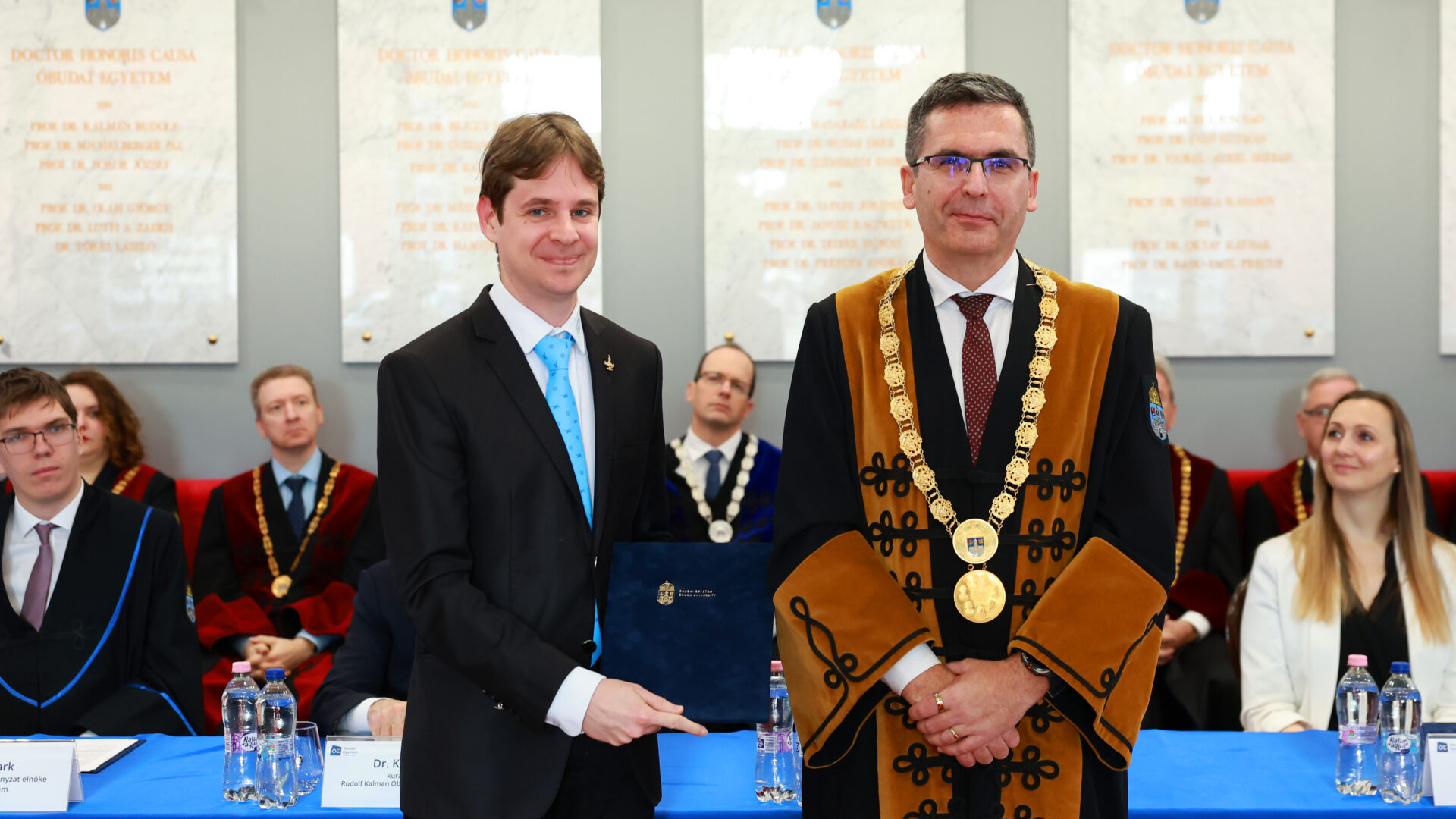
The Rector of Obuda University may award an honorary title of recognition to individuals who have made an outstanding contribution to increasing the international recognition of the journal Acta Polytechnica Hungarica. In recognition of his many years of dedicated work as track chair in developing the journal's scientific standards and supporting its successful operation, the Rector of Obuda University awarded the honorary title of recognition to Prof. Dr. Rudolf Andoga for his outstanding performance as track chair of the Informatics section.
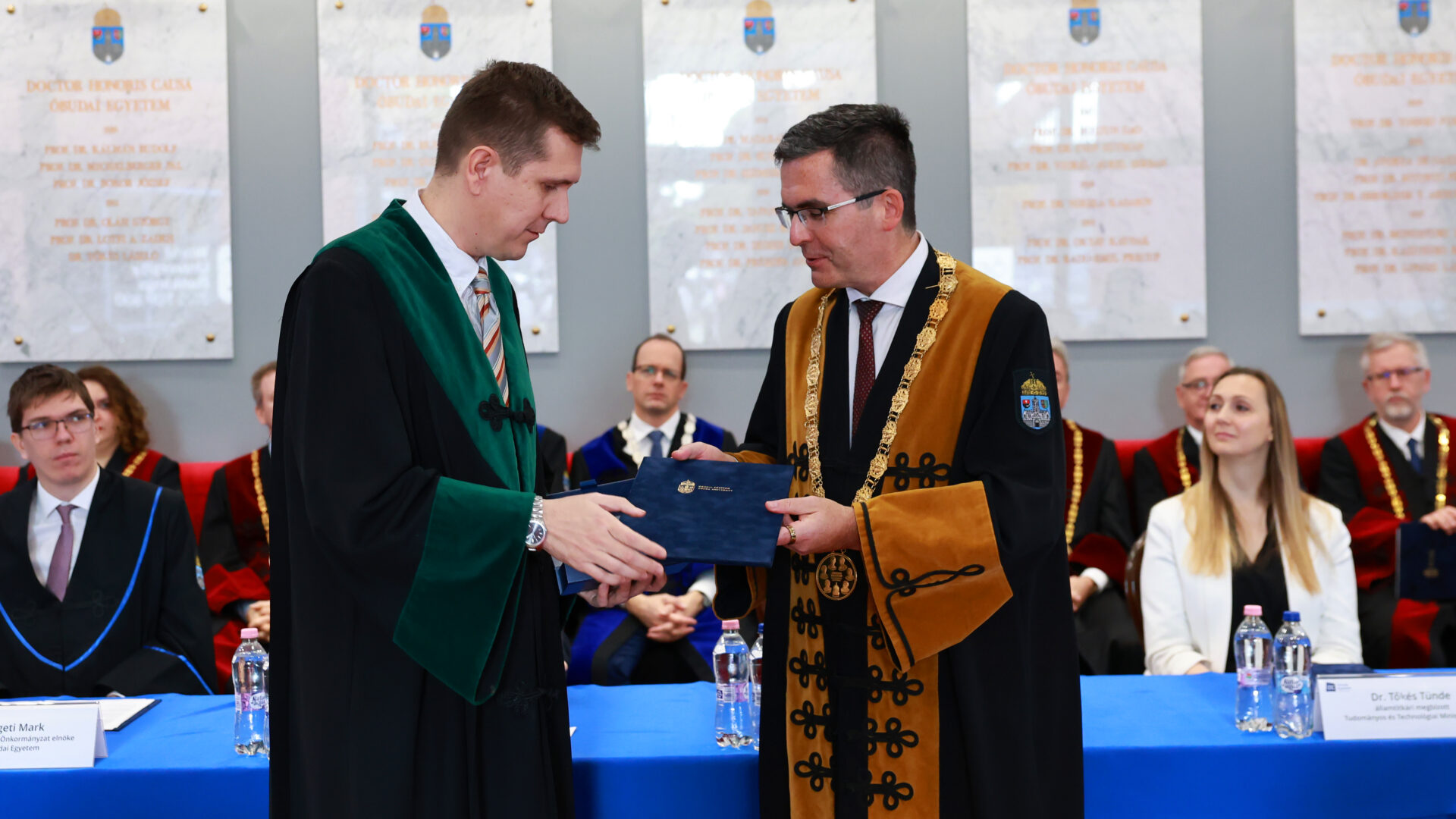
In recognition of his many years of dedicated work as track chair in developing the journal's scientific standards and supporting its successful operation, the Rector of Obuda University awarded the honorary title of recognition to Dr. Richárd Horváth for his high-quality performance as track chair of the Mechanical Engineering section.
Guests from Hungarian communities abroad and from other countries included Dr. József Pálfi, Rector of Partium Christian University; Prof. Dr. Ryszard Klempous, Professor at Wrocław University of Science and Technology, Poland; Dr. Konrad Kluwak, Researcher at Wrocław University of Science and Technology, Poland; Dr. Viktor Traski, Director of the Ukrainian-Hungarian Educational and Scientific Institute of Uzhhorod National University; Dr. László Lengyel, Head of the Senta training site of the Hungarian University of Agriculture and Life Sciences; Dr. Erika Seres Huszárik, Vice-Rector for Education at J. Selye University; Prof. Dr. József Kövecses, Full Professor at McGill University in Canada and Distinguished Professor of Obuda University; as well as members of the Rudolf Kalman Foundation for Obuda University, the presidency and leadership of the John von Neumann Computer Society, leaders of Hungarian higher education institutions and professional organizations, and delegates from numerous embassies and diplomatic missions.