


SomatoInfra Laboratory Opens at Obuda University, Creating New Opportunities for AI-Based Healthcare Research
A SomatoInfra Laboratory equipped with state-of-the-art measuring devices was inaugurated at the Bánki Donát Faculty of Mechanical and Safety Engineering of Obuda University on November 16. The research facility opens new horizons in the study of the human body, in somatological research, and in the field of AI-based healthcare development. The equipment was donated to the higher education institution by Dr. Heping Cao. “The establishment of the laboratory is an important milestone in the development of the university’s medical technology research activities,” emphasized Rector Prof. Dr. Levente Kovács.
In the SomatoInfra Laboratory, researchers can use advanced imaging and measurement technologies to examine the structure and physical characteristics of the human body, and their changes, in greater depth than before. The combined use of different measurement methods can be particularly valuable for health assessment, medical technology research, and the development of data-driven diagnostic and AI-based solutions.
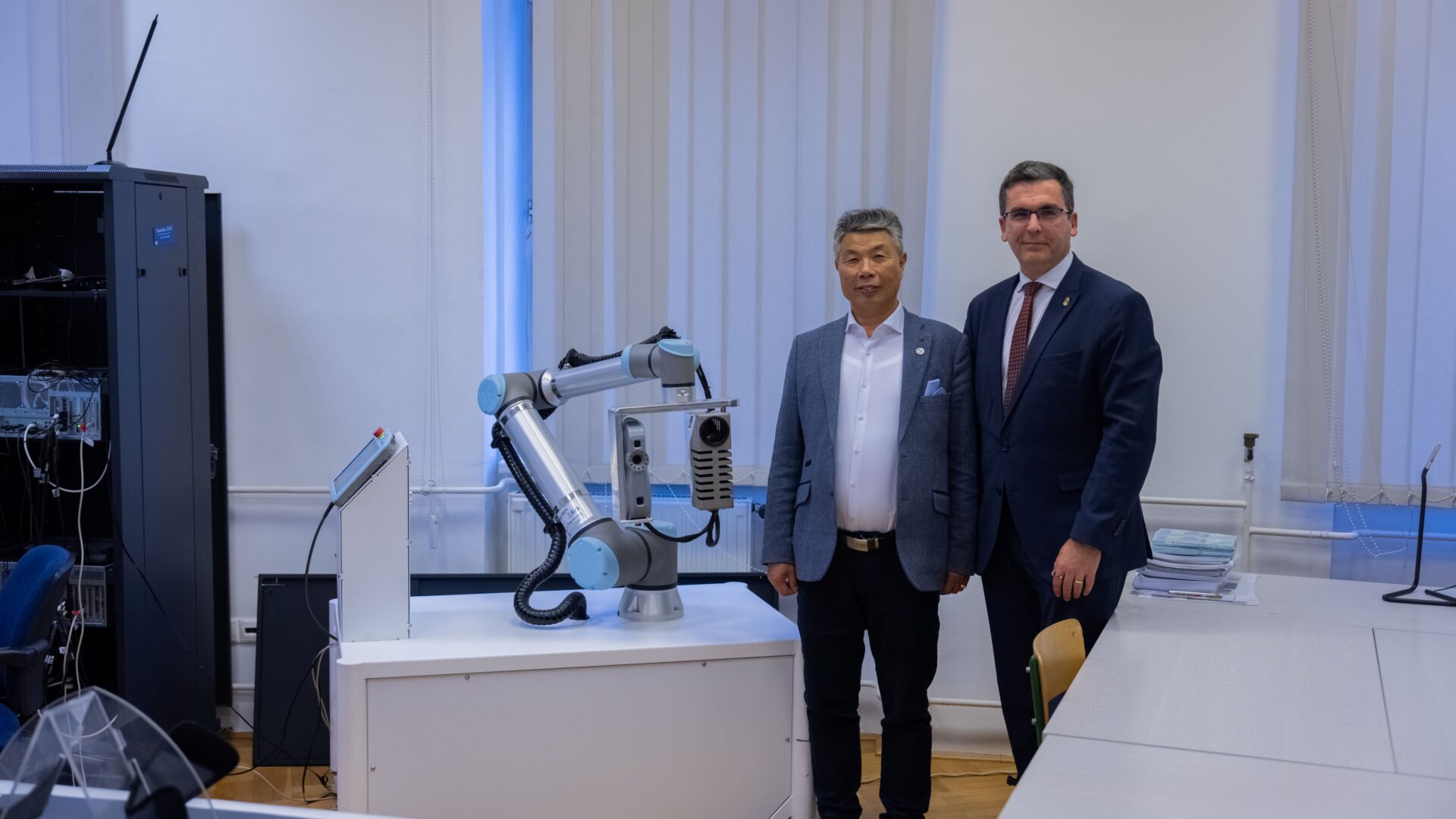
Prof. Dr. Levente Kovács, Rector of Obuda University, thanked Dr. Heping Cao for the substantial donation. In his speech, he emphasized that the establishment of the new SomatoInfra Laboratory is an important milestone for the university’s MedTech-oriented activities, particularly in exploring the therapeutic and practical opportunities of robotics, image processing and personalized medicine, and in developing its AI-based infrastructure. The new equipment provides measurement and research opportunities that were not previously available at the institution in this form. As he put it: “The project strengthens the competitiveness not only of the university but, in a broader sense, of Hungary in the field of medical technology innovation, while attracting new researchers and students to the institution, increasing the number of our scientific publications and our international visibility.” He also highlighted that the entire process was completed in less than six months, which is a good example of the effective cooperation, operational readiness and commitment of the university’s staff.
“The research activity related to the laboratory goes back more than 30 years, during which more than 150,000 measurement data points have been collected,” said Dr. Heping Cao, presenting the key figures. He added that this significant research data asset will also be made available to Obuda University, further increasing the scientific value of the laboratory and the potential of future research. Decades of research experience, the available measurement data and the state-of-the-art equipment together can create an especially valuable foundation for new AI-based research. With appropriate processing and validation of the dataset, it may become possible to develop machine learning and deep learning methods, to study various physical changes and correlations, and to create automated evaluation and predictive models.
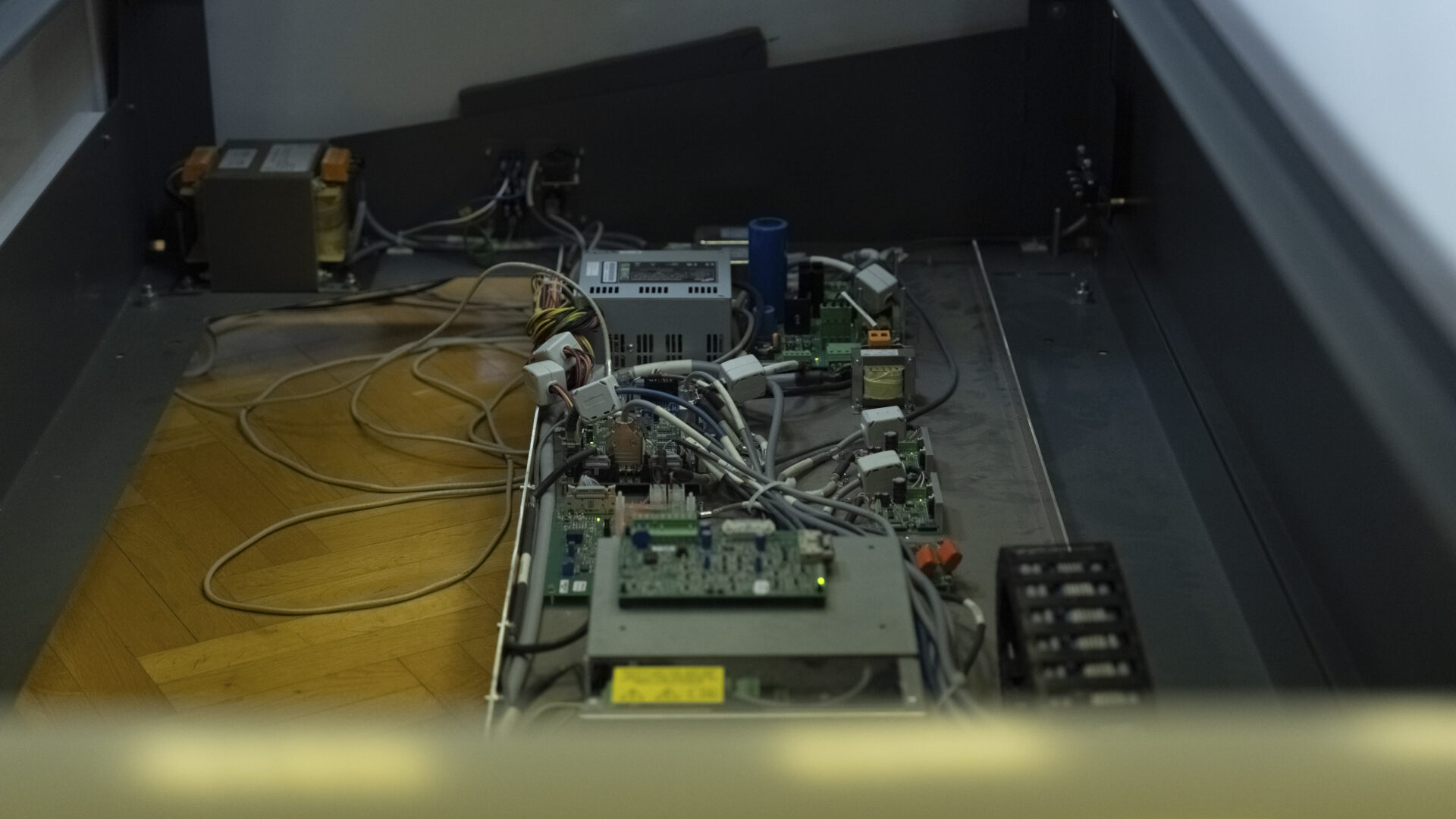
Assistant Professor Dr. Lehel Dénes-Fazakas and doctoral students Barbara Simon and Ádám Hartveg played an active role in setting up and furnishing the laboratory and in commissioning its instruments. Dr. Lehel Dénes-Fazakas presented in detail the DEXA (Dual-Energy X-ray Absorptiometry) bone densitometer, which uses low-dose X-rays at two different energy levels to determine the mineral content and density of bones, as well as to examine body composition. The technology can play a significant role in osteoporosis research, in monitoring changes in body composition, and in analyzing various health conditions. Doctoral students Barbara Simon and Ádám Hartveg presented the infrared-based 3D body scanner robot. The device makes it possible to map the external geometric characteristics of the human body in three dimensions, to examine body shape and posture, and to process the measurement data digitally. The technology can be particularly valuable in research related to musculoskeletal, anthropometric and body surface changes. Analyzing the resulting data with artificial intelligence can open up further research directions.