


A Future Built on Knowledge: Obuda University’s Achievements at the Hungarian Science Festival
Hungarian science has been celebrated on November 3 since 1997, in memory of the day in 1825 when István Széchenyi, a member of the Hungarian National Assembly offered a year’s income from his estates to found the Hungarian Learned Society, the predecessor of the Hungarian Academy of Sciences. Obuda University joins the national series of events with a month-long program. At the opening ceremony, the university presented its Most Cited Researcher of the Year, Researcher of the Year and Young Researcher of the Year awards, as well as Stanford 2% certificates, National Higher Education Scholarships, awards for supporting student research, University Research Scholarship Program grants and Student Publication Awards.
In his speech, Rector Prof. Dr. Levente Kovács emphasized that, as a result of consistent work in recent years, Obuda University has become a leading institution in Hungarian engineering education.
The university’s results and development are also reflected in the statistics. The number of full-time doctoral students has risen to nearly 60, an almost fivefold increase, while student excellence, the number of higher education scholarship holders and the number of applicants to the university’s programs have all grown significantly, the Rector said.
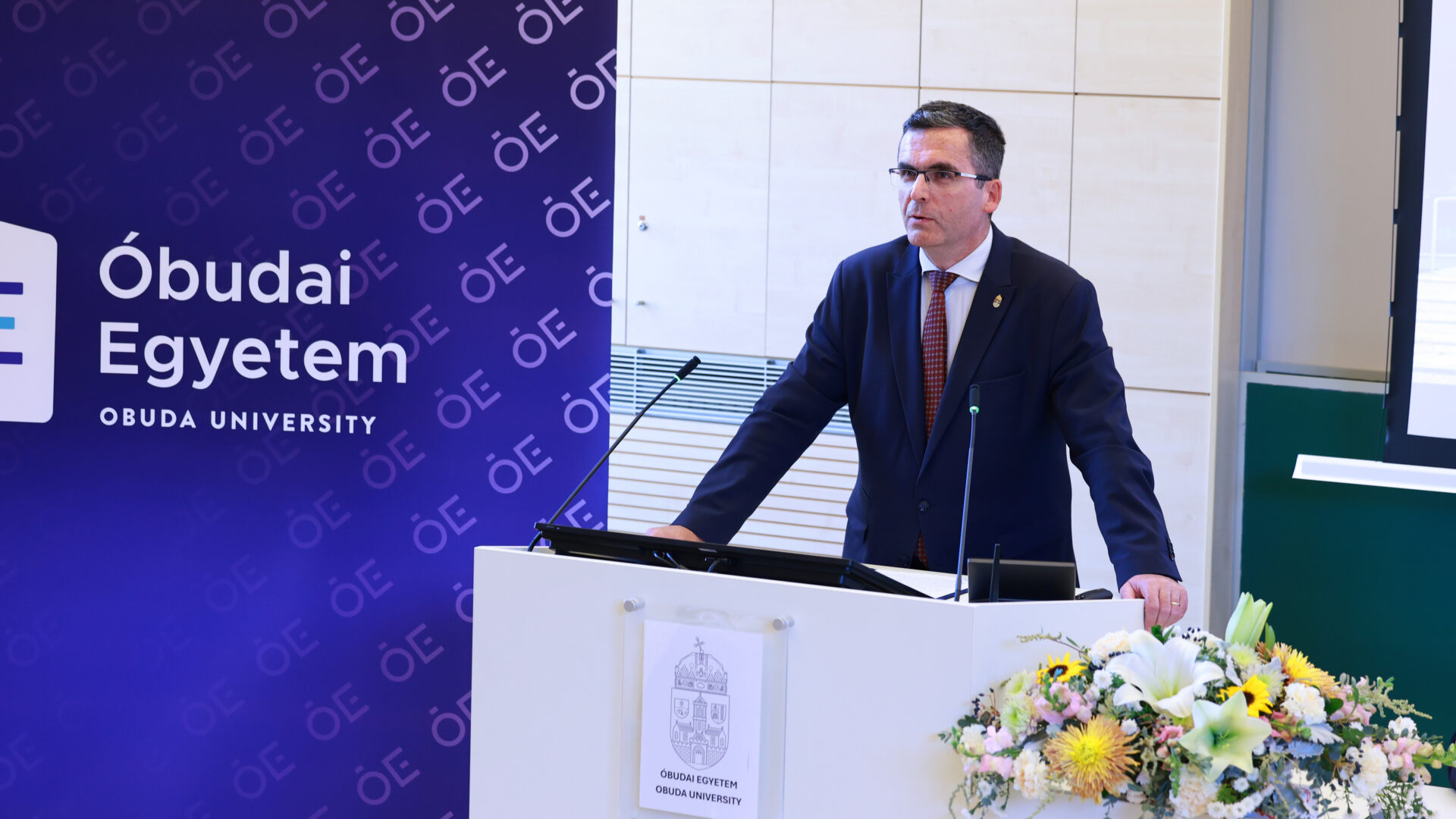
He added that the university’s own scientific journal, Acta Polytechnica Hungarica, has reached unprecedented heights, and the university is consistently ranked among the world’s top 800 universities, an outstanding achievement among some 30,000 higher education institutions worldwide. In terms of student excellence, Obuda University now ranks 6th in national rankings, even though it mainly offers engineering programs. The Rector also noted that students are taking part in the university’s Scientific Students’ Associations conferences in growing numbers, with great enthusiasm and high-quality entries. “It is a great honor and pleasure for me that next spring our university will host the Physics, Earth Sciences and Mathematics Section of the 38th National Scientific Students’ Associations Conference (OTDK),” he said. “We have dedicated an entire month to celebrating science at our university, and our rich program reflects the commitment of our entire community to science.”
Awards at the Hungarian Science Festival
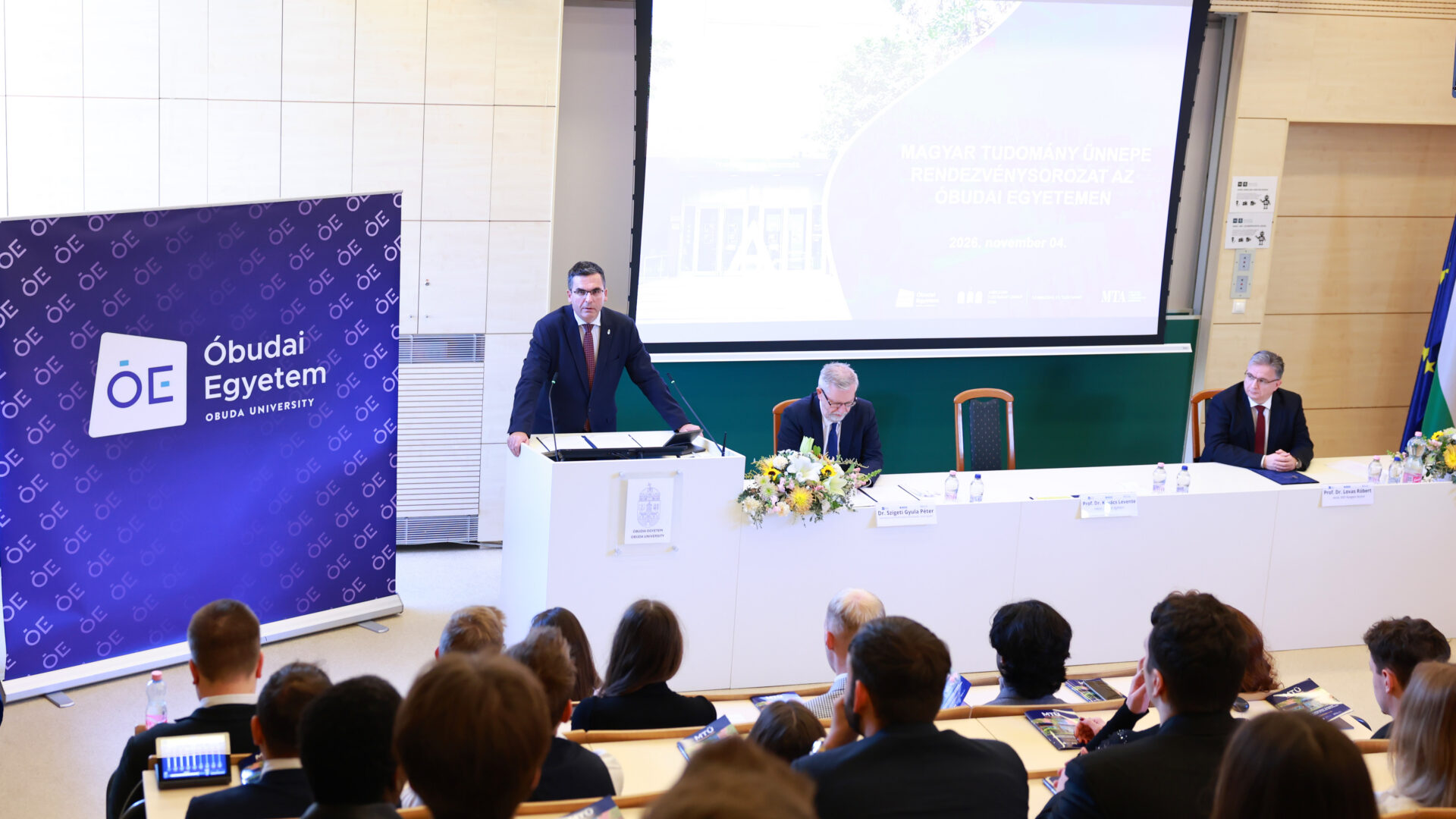
The awards were presented by Rector Prof. Dr. Levente Kovács, and the laudations were read by Dr. Gyula Szigeti, Vice-Rector for Scientific Coordination. The event was also attended by Prof. Dr. Róbert Lovas, Chair of the IEEE Hungary Section.
Most Cited Researcher of the Year
The university’s Council of Professors may award the Most Cited Researcher of the Year Award to lecturers and researchers in recognition of their scientific results, outstanding publication activity and measurable visibility in international science. This year, the award went to Prof. Dr. János Dusza, Doctor of the Hungarian Academy of Sciences and external member of the Academy.
Researcher of the Year
The Council of Professors may award the Researcher of the Year Award to lecturers and researchers in recognition of outstanding technical achievements, scientific results, publication activity, school-founding work and their role in Hungarian and international science. This year, the award went to Prof. Dr. Sándor Szénási, Full Professor, Head of Department and specialization leader at the Institute of Software Design and Development of the John von Neumann Faculty of Informatics, and head of the High-Performance Computing Research Group.
Young Researcher of the Year
The Council of Professors may award the Young Researcher of the Year Award to lecturers and researchers under 35 in recognition of outstanding technical achievements, scientific results, publication activity and their role in science. This year, the award went to Zhyar Kwekha Rostam, Assistant Lecturer at the John von Neumann Faculty of Informatics and PhD student at the Doctoral School of Applied Informatics and Applied Mathematics.
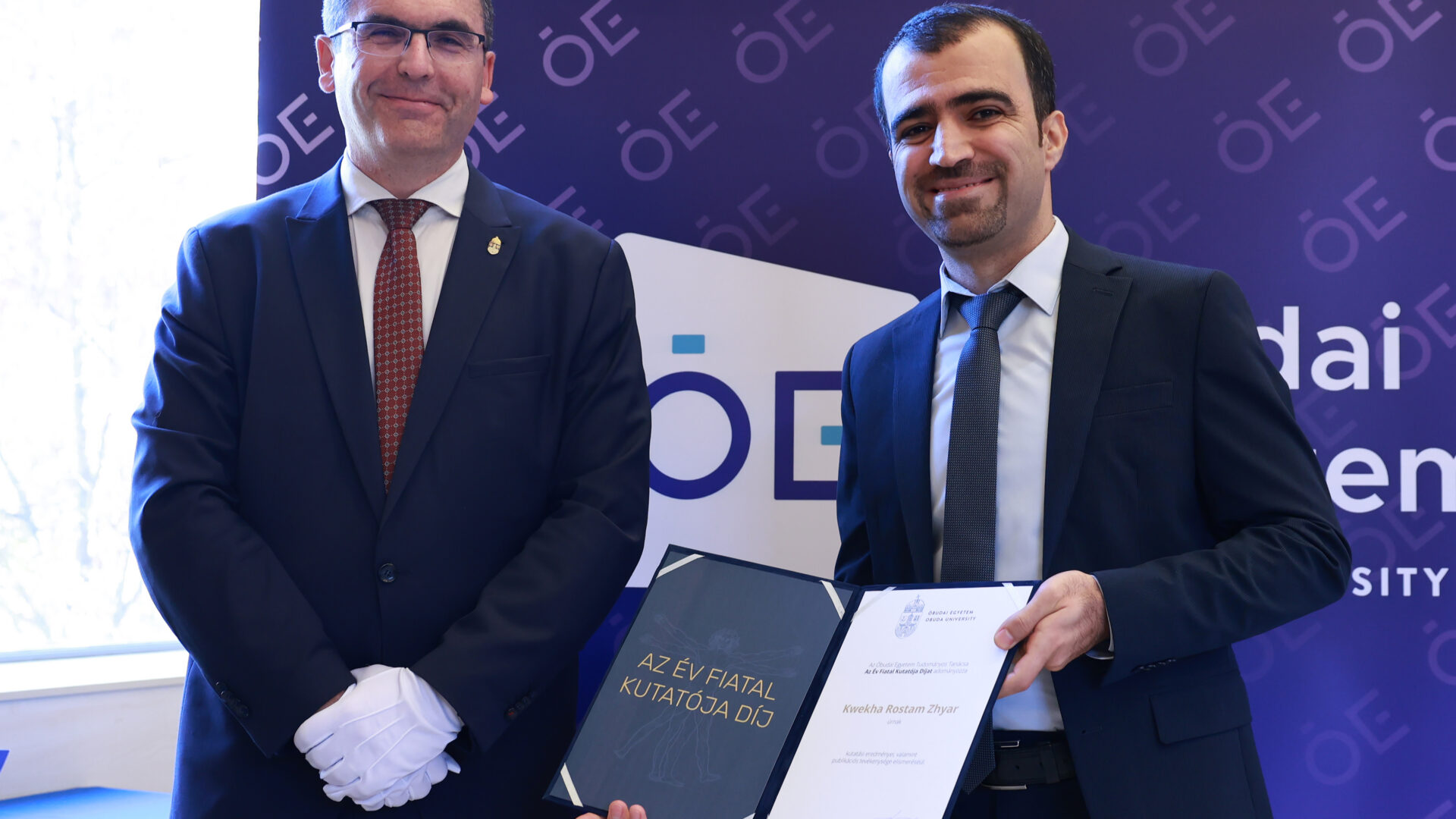
Since 2024, he has published 11 peer-reviewed papers, including in IEEE Access (Q1) and ACM Transactions on Intelligent Systems and Technology (D1, impact factor 10.7). His research focuses on natural language processing and the application of large language models, especially the automatic classification of scientific and biomedical literature. He is a member of Obuda University’s Applied Machine Learning Research Group.
Stanford 2%

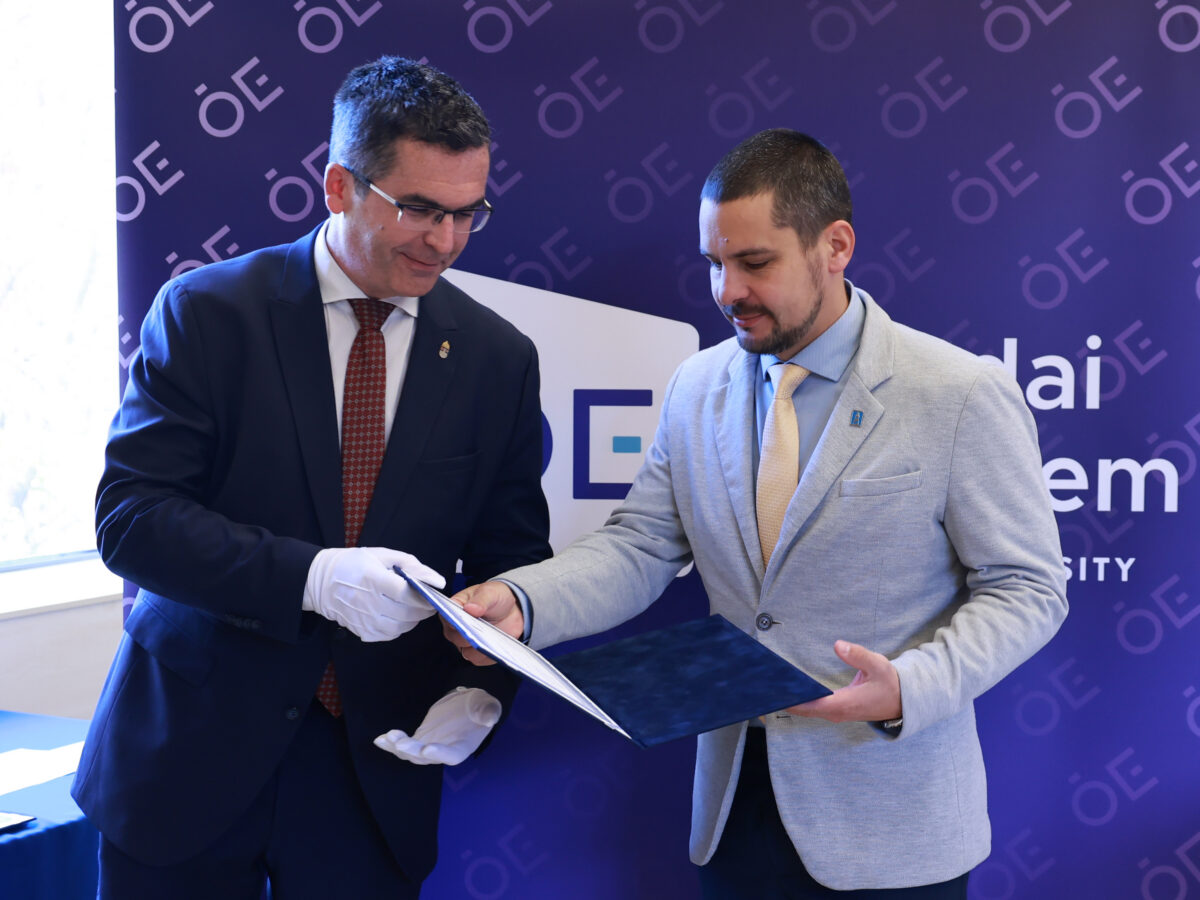
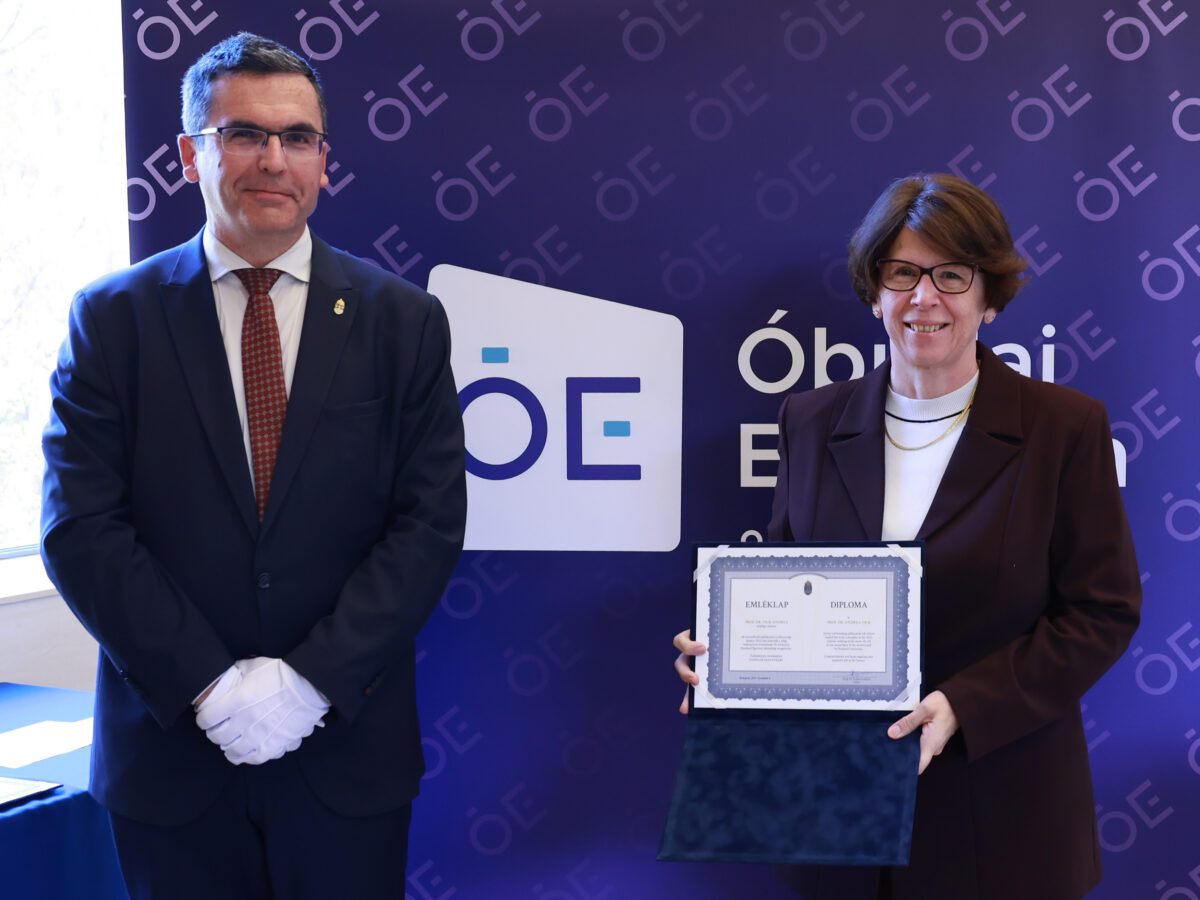
Obuda University closely follows the scientific work of its staff. Stanford University publishes a database of more than 100,000 researchers, roughly the top 2% of the world’s scientists, with standardized information on citations, h-index, co-authorship-adjusted hm-index and citations to papers in different author positions. This year, seven Obuda University researchers appear in Stanford University’s citation ranking, a source of great pride for the entire university community. Certificates of recognition were awarded to Dr. Amirhosein Mosavi, Dr. habil. József Katona, Prof. Dr. Tamás Haidegger, Prof. Dr. Andrea Tick, Prof. Dr. Imre Rudas and Prof. Dr. Levente Kovács. Among the seven, the ceremony also honored the memory of Prof. Dr. János Fodor, former Rector of Obuda University, who passed away in 2016.
National Higher Education Scholarship

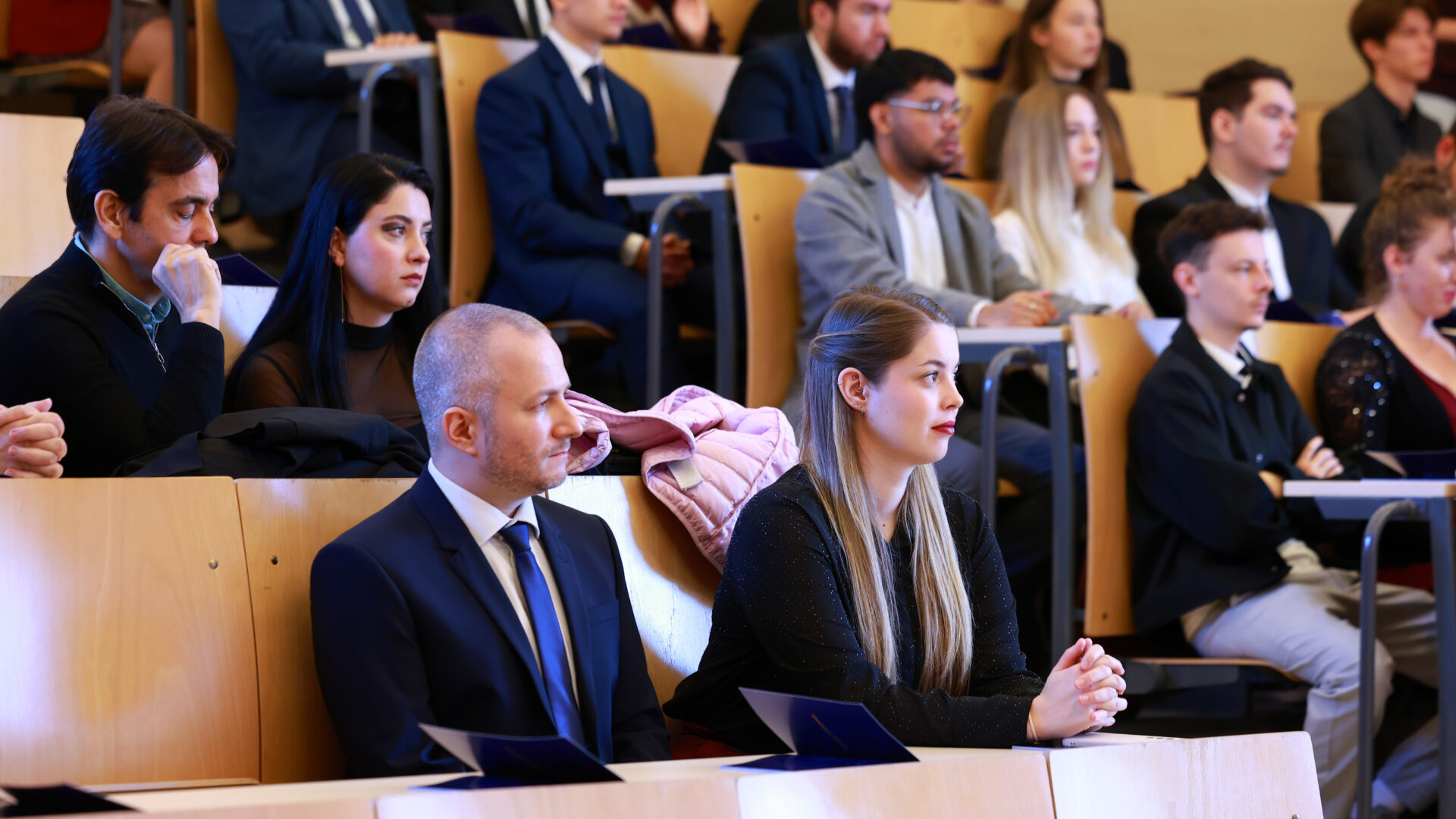
This year, 57 students received the National Higher Education Scholarship.
Award for Supporting Student Research
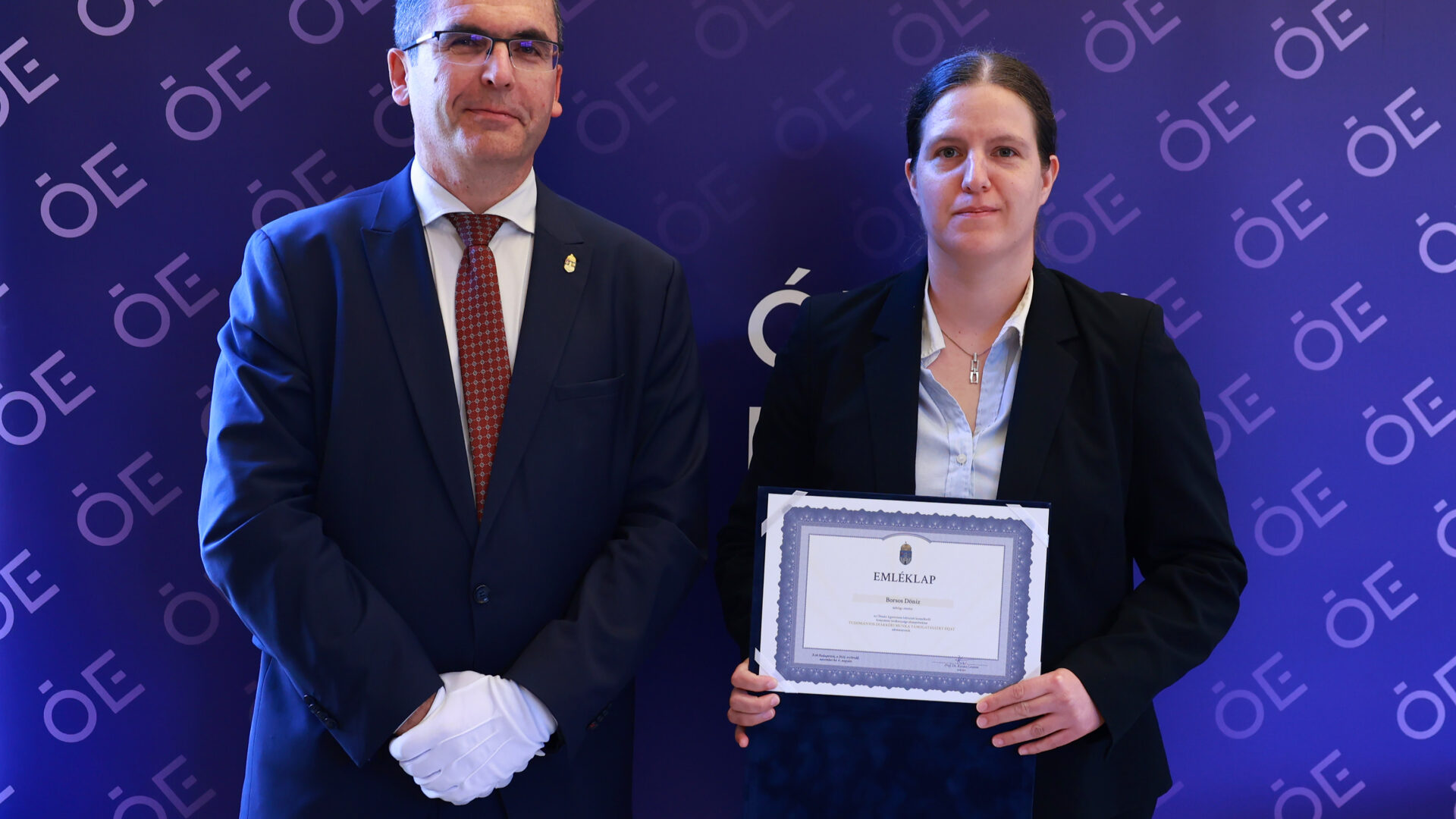
Under the university’s Scientific Students’ Associations regulations, the University Scientific Students’ Council may nominate supervisors of outstanding student research papers and those who organize and support student research for the Award for Supporting Student Research. Based on the Rector’s decision, this year’s recipients are:
Döníz Borsos has supervised and mentored student researchers since 2019, supporting the work of both Hungarian and international students. Her main goal is to support the research career path from student research to doctoral studies and to help prepare the next generation of researchers. She has supervised 46 student research papers. Her students have won 11 first, 8 second and 7 third prizes and received 17 nominations for the OTDK. At the OTDK, her students won one first prize, one second prize and two special prizes, and at the MTDK, three special prizes.
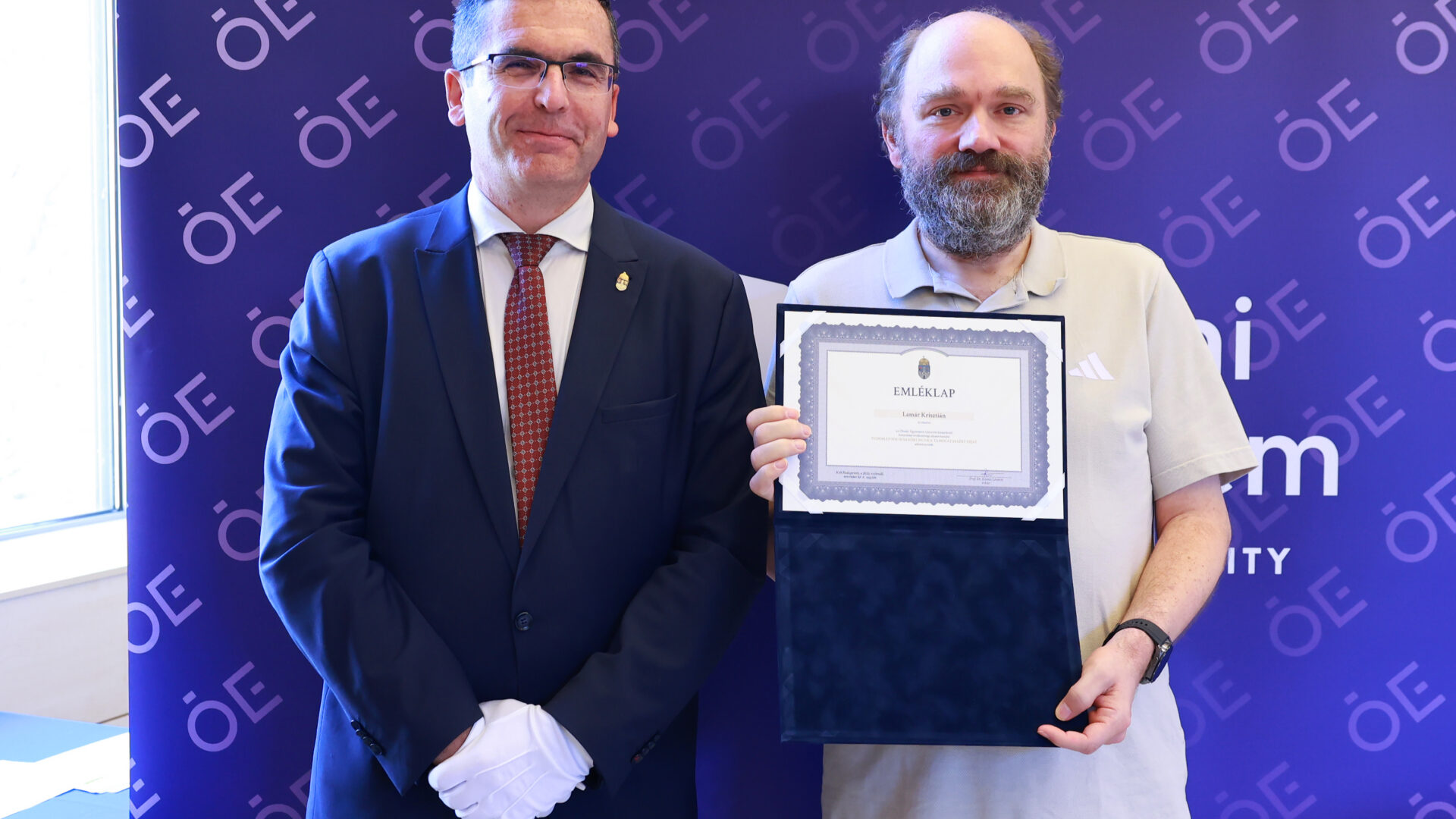
Krisztián Lamár has been involved in student research at the institution since 2001. From 2001, he was responsible for student research at the Institute of Automation and at the Óbuda site of the Kandó Kálmán Faculty of Electrical Engineering, and was an advisory member of the College Scientific Students’ Council. Since 2003, he has occasionally taken part in the work of the Engineering Sciences Committee of the National Scientific Students’ Council (OTDT). In 2013, he became responsible for student research at the faculty, a voting member of the University Scientific Students’ Council, and Obuda University’s voting representative on the OTDT Engineering Sciences Committee. From 2013 to 2015, he was a member of the organizing committee of the 32nd OTDK in Engineering Sciences. Since 2016, he has organized Obuda University’s participation in the Transylvanian Scientific Students’ Conference in Engineering. Since 2021, he has been Vice-Chair of the OTDT Engineering Sciences Committee, and since 2022, he has served on the student research evaluation committee of the Târgu Mureș Faculty of Sapientia Hungarian University of Transylvania.
Krisztina Wittek has been a member and secretary of the Scientific Students’ Committee of the Ybl Miklós Faculty of Architecture and Civil Engineering since the faculty joined Obuda University. Her work has contributed to the growing number of student research papers, the organization of the faculty’s spring and fall conferences, its increasing success at the OTDK, and well-founded funding applications for its annual student research activities. Thanks to her networking skills, two secondary schools now take an active part in the faculty’s student research activities, and its secondary school section, based on coordinated consultation by lecturers, University Research Scholarship Program fellows and doctoral students, is becoming a tradition.
University Research Scholarship Program
Obuda University places great emphasis on supporting the next generation of scientists and the professional development of young researchers. In this spirit, the ceremony honored the fellows of the University Research Scholarship Program (EKÖP).
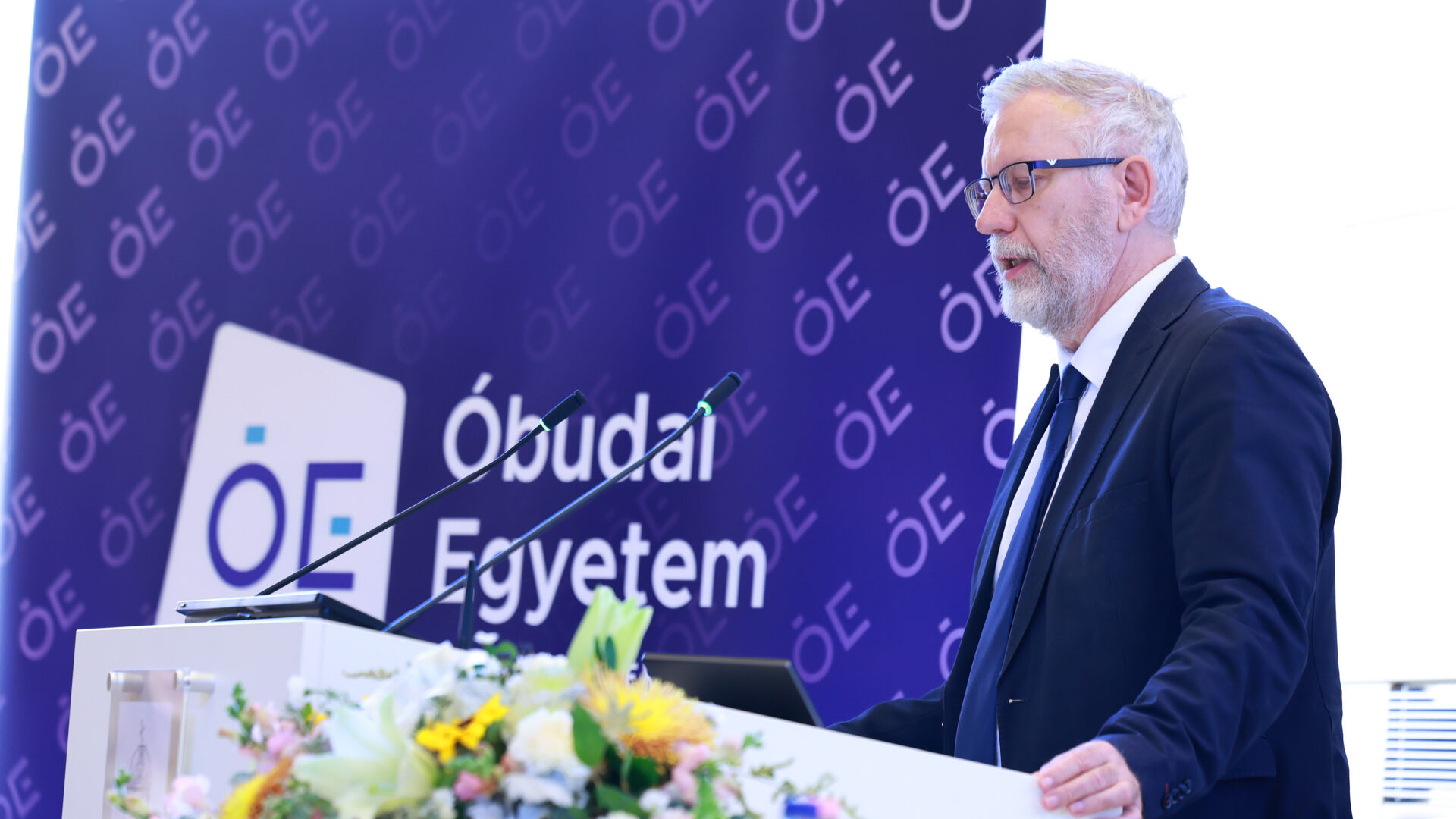
The results of the program were presented by Dr. Gyula Szigeti, Vice-Rector for Scientific Coordination.

Student Publication Award
The university’s Scientific Council may award the Student Publication Award, in BSc/MSc and PhD categories, to students in recognition of their achievements in publishing outstanding technical work and student research results.
In the BSc/MSc category, this year’s award went to Viktória Annamária Varga. Her research focuses on the properties and applications of diamond-like carbon (DLC) coatings, especially the effect of surface preparation on coating adhesion and the behavior of advanced coatings under different loading conditions. She has published her results in scientific journals and conference proceedings. With her research on DLC coatings, she won first prize at the university’s Scientific Students’ Associations conference and at the International Scientific Students’ Conference. In earlier research, she studied engineering applications of fuzzy logic, and with two fellow students she won second prize at the OTDK with a paper on the topic. Her outstanding scientific work, research results and professional achievements as a student make her a well-deserved recipient of the award.
In the PhD category, the award went to Ádám Mészáros, a seventh-semester doctoral student at the Doctoral School on Safety and Security Sciences. In 2025, he contributed to numerous scientific publications in Hungarian and international journals, edited volumes and conference proceedings, including several papers presented at IEEE international conferences and indexed in Scopus and Web of Science. His research focuses on teamwork, soft skills, student collaboration and project-based learning, and his doctoral research examines the relationship between agile methods and tools used in education and psychological safety. Alongside his research, he is committed to talent development and regularly supervises student research papers in both higher education and secondary school sections.