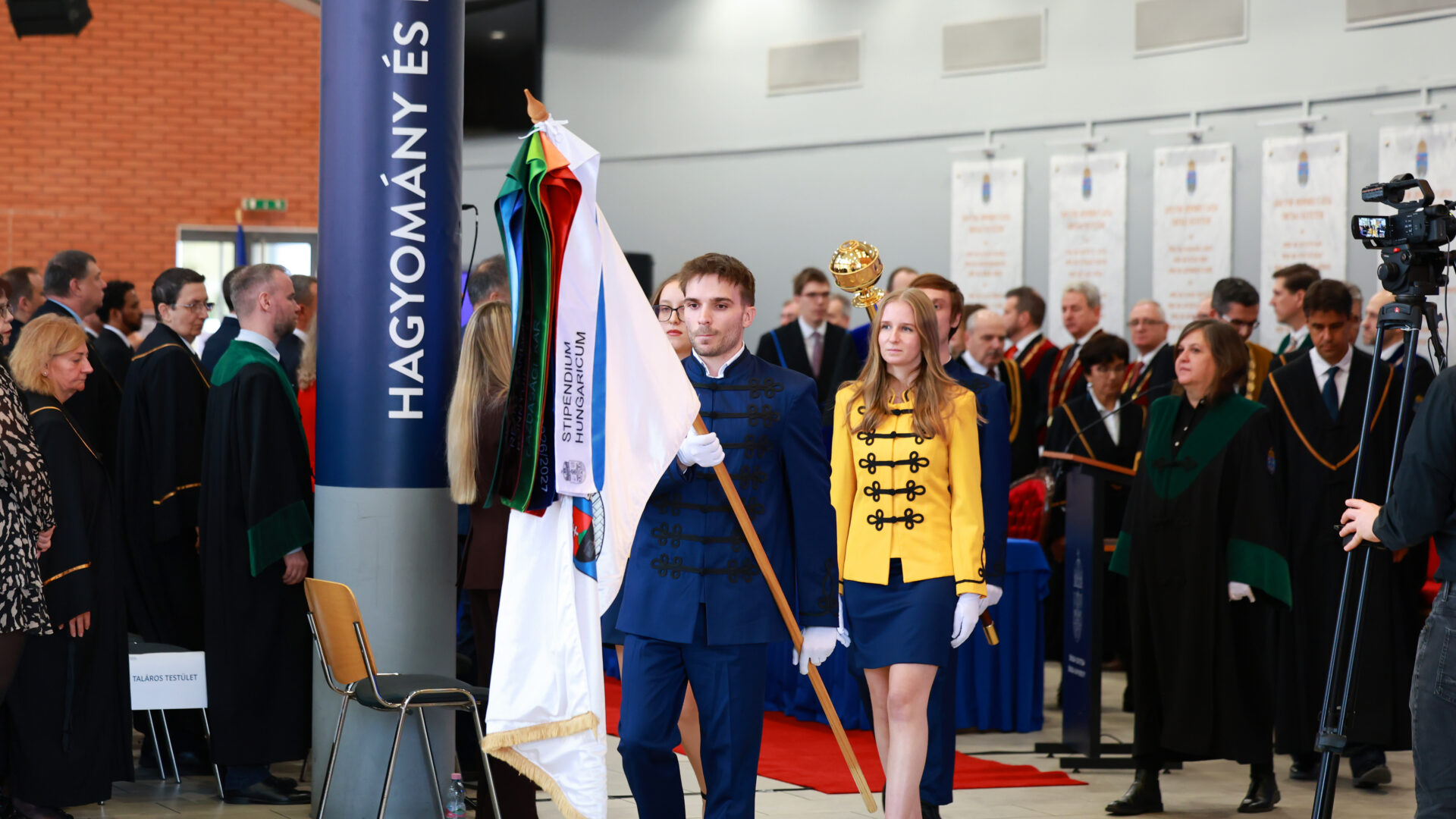


New Doctors and a New Full Professor at Obuda University – 12 PhDs Earned in English-Language Programs
Obuda University and its doctoral schools have concluded an extremely successful year: 18 researchers earned habilitated doctor titles and 43 were awarded PhD degrees, 12 of whom completed their studies in English-language programs. In addition, two doctoral degrees were recognized, further strengthening the institution’s international network and scientific openness. In total, 63 achievements related to academic degrees were recognized this year. “Comparing the figures with the previous year’s results also shows remarkable trends. There has been an increase of nearly 27 percent in doctoral degrees awarded, a tangible result of the professional performance, research potential and talent development work of our doctoral schools,” Prof. Dr. Levente Kovács emphasized at the ceremony for the presentation of doctoral and habilitation diplomas on November 12, where 21 new doctors received their diplomas: 4 habilitated doctors and 17 PhD doctors.
“The popularity of our doctoral schools is mainly due to growing research opportunities and attractive scholarship programs. Our university now has five doctoral schools, and our doctoral programs cover four fields of science and seven disciplines. This year’s number of admitted students stands out, whether compared with figures from five years ago or from last year. For example, a total of 16 students began their studies in the Cooperative Doctoral Program in 2026. A significant number of international students also come to us for doctoral studies through the Stipendium Hungaricum program. Their number has quadrupled over the past four years, and twice as many first-year students began their studies with this scholarship in the 2026/27 academic year as in the previous year.
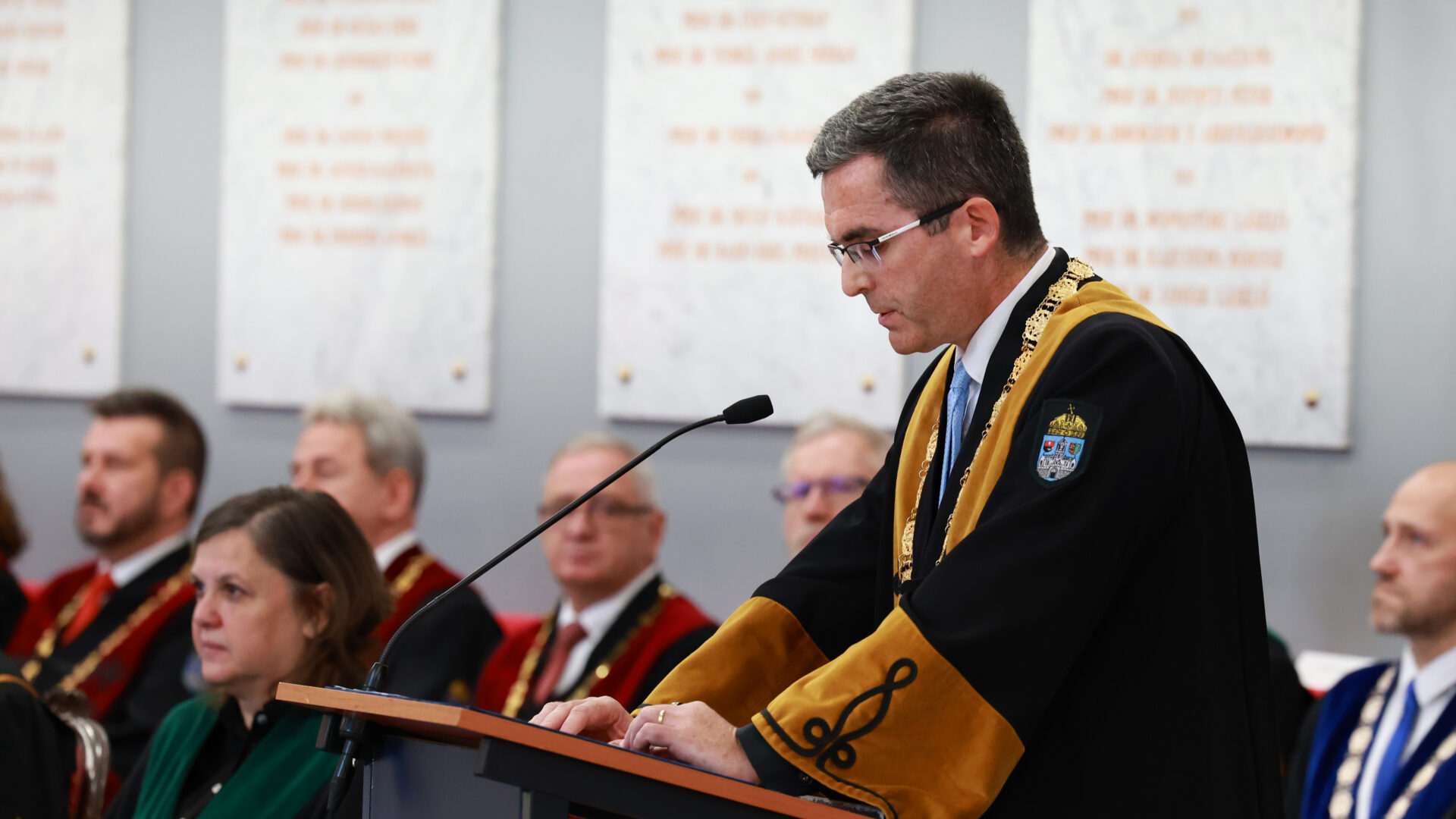
To strengthen the next generation of doctoral students and our research base, we are launching the OU Doctoral Momentum Scholarship from the 2026/2027 academic year. In addition to meeting the mandatory requirements, the scholarship is subject to a professional evaluation every semester. The amount of support increases gradually over the eight semesters. We are also establishing a separate, publication-focused, competitive scholarship that rewards outstanding performance,” said Rector Prof. Dr. Levente Kovács, adding: “Our key goal is to further increase the number of doctoral students.”
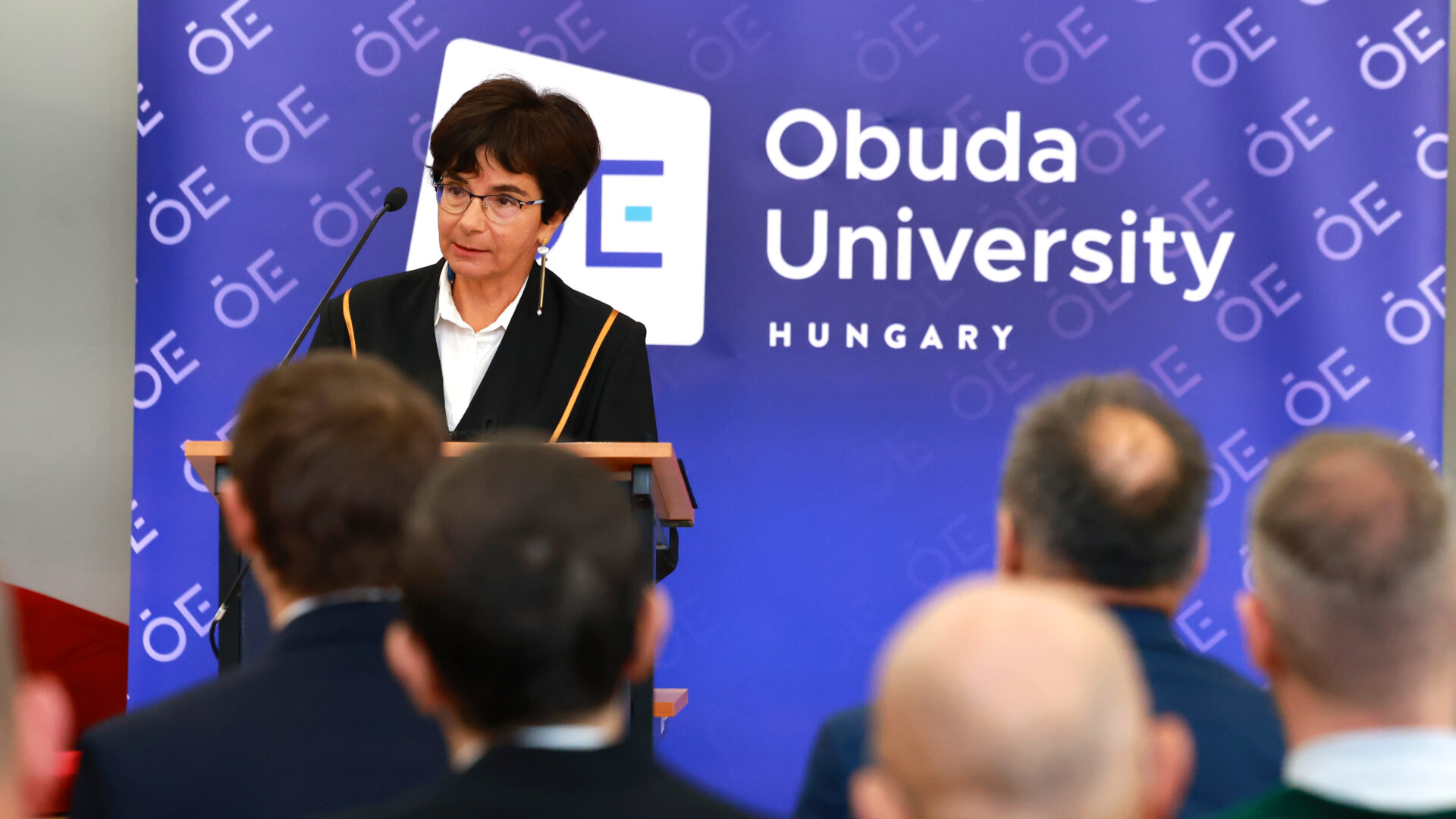
In her speech, Prof. Dr. Márta Péntek, Chair of the University Doctoral and Habilitation Council, which awards habilitation, said: “The appointment as full professor is an undeniable recognition of the persistent and outstanding work done in the service of science, education and the university community. Standing behind a university chair is both a privilege and a responsibility. The habilitated doctor title is an important milestone in an academic career. It carries the weight of publications in international journals, successful grant applications, professional debates and the joy of scientific breakthroughs. Earning a PhD degree is not simply receiving a diploma but entering the elite of the Hungarian and international scientific community. The road to a doctoral degree is paved, among many other things, with years of strenuous work and, above all, the joy of discovery and uncompromising curiosity.” She added: “From today, you are ambassadors of facts, critical thinking and truth. Do not be afraid to challenge existing dogmas. Progress always begins where we cross familiar boundaries. Knowledge is power, but it is also responsibility. Use the intellectual capital you have gained to improve society and to solve global and local problems.”
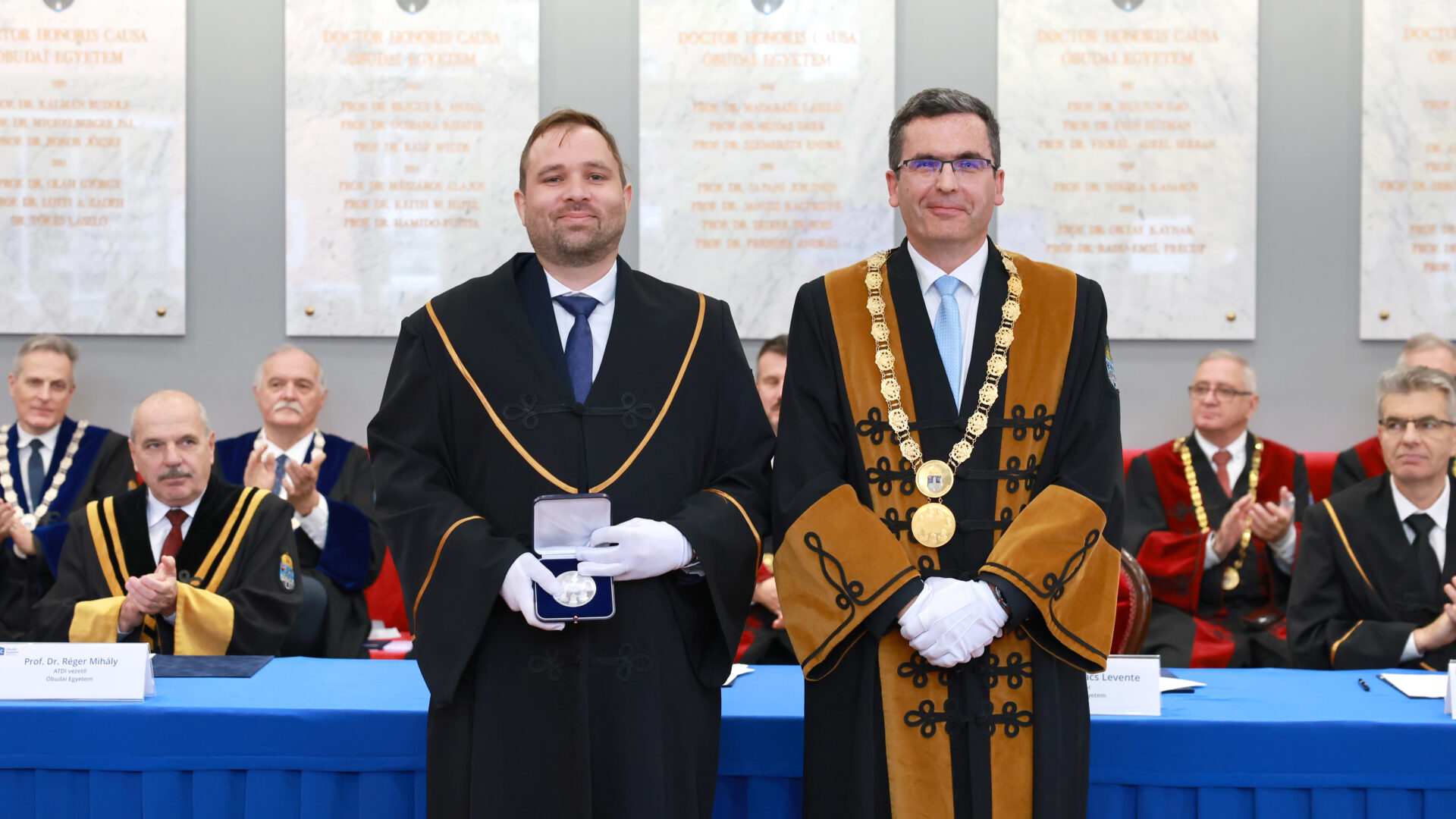
Our new full professor
Prof. Dr. Dániel András Drexler is an outstanding lecturer and researcher at Obuda University who has achieved significant results in biomedical engineering, applied mathematics and the development of cyber-medical systems. As the leading researcher of the Computational Therapy Optimization Research Group at the Physiological Controls Research Center and of several research projects of national importance, he contributes to the development of innovative healthcare technologies, tumor modeling and personalized therapeutic solutions. His teaching and research at Obuda University play a decisive role in the institution’s scientific development.
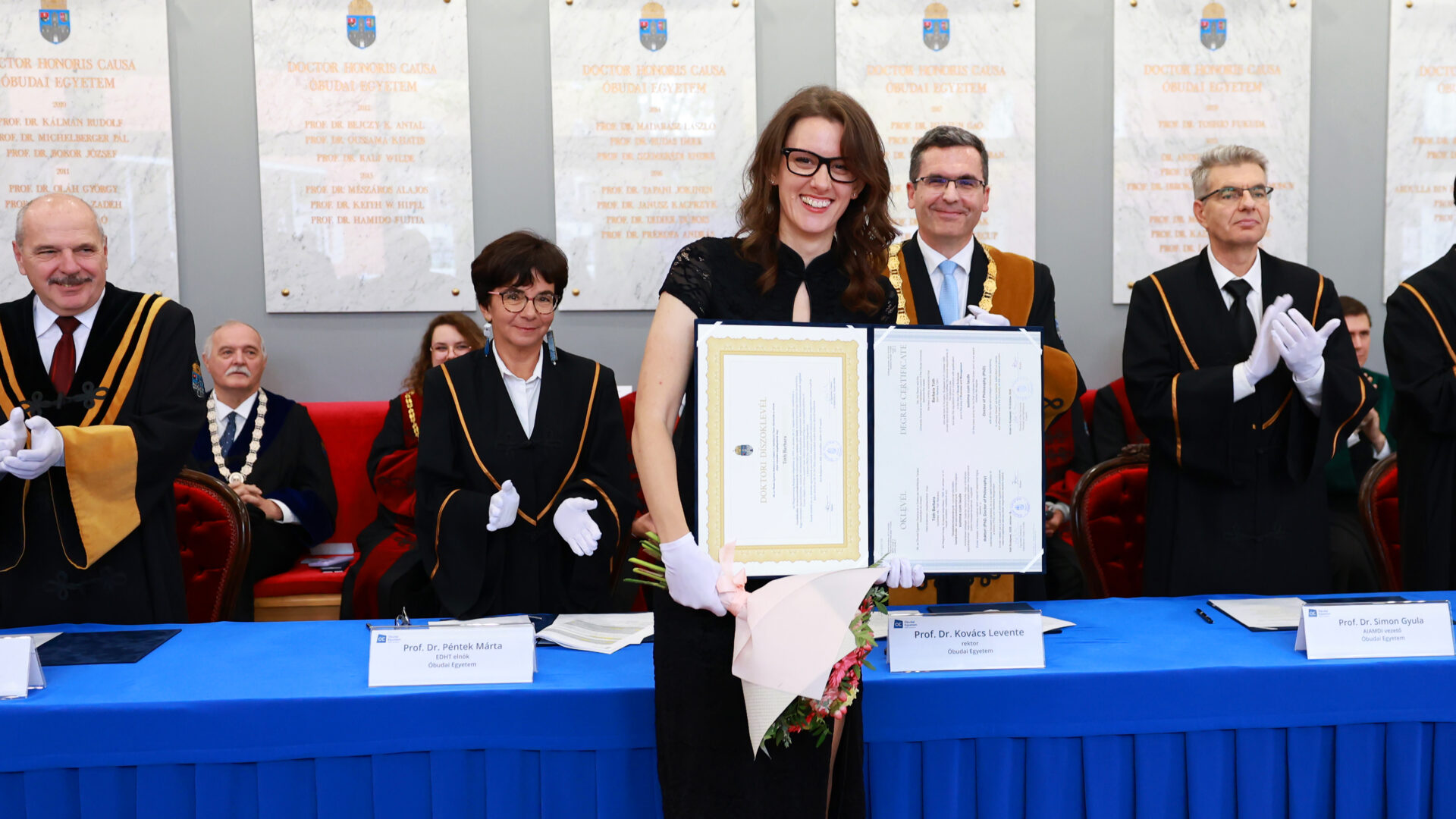
After the presentation of the doctoral diplomas, Dr. Barbara Tóth gave a speech on behalf of the new doctors. She said: “At the doctoral defense, the moment comes when we have to answer a few questions about our research. Why did we choose a particular method? What did we find, and what did we learn that was not known before? At our defense, we showed that we are able to ask questions in our field that seek universal answers, that we can decide how to pursue the answer, and that we can take responsibility for what we claim based on our results.” On behalf of her fellow doctors, Barbara thanked everyone who helped them learn all this. Speaking of her supervisor, she said he had reminded her that others can build on what she publishes. “We are grateful to those who gave us something to hold on to and encouraged us to dare to reach further. Each of us has had, and still has, our own fixed points. For many of us, Obuda University is one of them,” she said, praising the supportive environment she experienced, which also helped her find her place in the professional community.