

"Today's IT professionals are already collaborating with AI agents on the market" – Interview with Prof. Dr. György Eigner, Dean of the Neumann Faculty
The John von Neumann Faculty of Informatics (NIK) at Óbuda University has become a definitive pillar of domestic IT education, where students gain direct exposure to the latest industry demands right during their university years. We spoke with Dean Prof. Dr. György Eigner about the faculty's spectacular growth trajectory over the past four years, the ever-strengthening focus on practice-oriented education, and the strategies shaping the future. During the interview, we touched upon the faculty's three key areas of focus: the integration of artificial intelligence, cybersecurity training, and the mission of the unique AI Campus programme.

How would you describe the faculty's growth trajectory, and what have been the most significant milestones over the past nearly five years since you became Dean of the John von Neumann Faculty of Informatics?
I took over the duties of the Dean four and a half years ago, and I can say that this period has also brought about a sort of paradigm shift. The implementation and execution of the institutional and rectorial strategy at the faculty level was our top priority. It was during this cycle that the programmes defining our new directions truly matured. Professionally, we shifted our focus toward artificial intelligence, cybersecurity, data science, and healthcare informatics, while the expansion of our degree programmes and internationalisation were also key objectives. When I assumed leadership of the faculty, we only had two bachelor's and two master's programmes, which was also when the newly announced business informatics master's programme was launched. Since then, we have significantly restructured our portfolio.We have introduced four new master's programmes: Cybersecurity Engineering, Data Science, Hospital and Medical Technology Engineering, and most recently, the Artificial Intelligence IT master's programme, which is launching in the autumn of 2026. Our Computer Science Engineering BProf (Operational Engineer) programme is currently available in Hungarian; we are developing this curriculum as well, and introducing a new specialisation. The faculty's largest-scale programme remains the Computer Science Engineering BSc, where we have also developed and are introducing a new specialisation based on the 'Science Park' concept. Furthermore, we have modernised both our Computer Science Engineering and Applied Mathematics master's programmes. We are particularly proud of launching our Pre-BSc, Pre-MSc, and Pre-PhD programmes, which help prepare students for studies at their respective levels. Upon successful admission, students from these preparatory programmes can progress not only to NIK but to any faculty or doctoral school within the university. This growth in student numbers has also been accompanied by an infrastructural renewal. Although our floor space has not increased significantly, we have carried out hundreds of millions of forints worth of professional infrastructure modernisation and upgraded our laboratory facilities, supported by the university's leadership, targeted grants, and our own resources. We have established three cybersecurity labs, a new networking lab, and developed a cloud-based digital infrastructure that is unique on a national level, with the support of the HUN-REN SZTAKI (Institute for Computer Science and Control).
A degree from the Neumann Faculty carries strong market value. Which programmes and specialisations are currently the most in demand?
The popularity of our Computer Science Engineering BSc remains unbroken, but our newly established programmes, such as Data Science, are also remarkably successful. I would particularly highlight the Artificial Intelligence IT master's programme, which was created under our leadership as a nationwide initiative and has achieved an outstandingly high number of applications. Part of our strategy is to offer the majority of our programmes both in part-time (distance learning) formats and in English, aligning closely with market demands. If I had to name specific areas, our Cybersecurity Engineering, Data Science, and Artificial Intelligence IT programmes are generating unprecedented interest. We have to conduct over 500 individual admission interviews for these master's programmes alone. These same topics are also the most popular among our short-cycle courses.
This is also where the AI Campus programme was born. What do you consider to be its main mission?
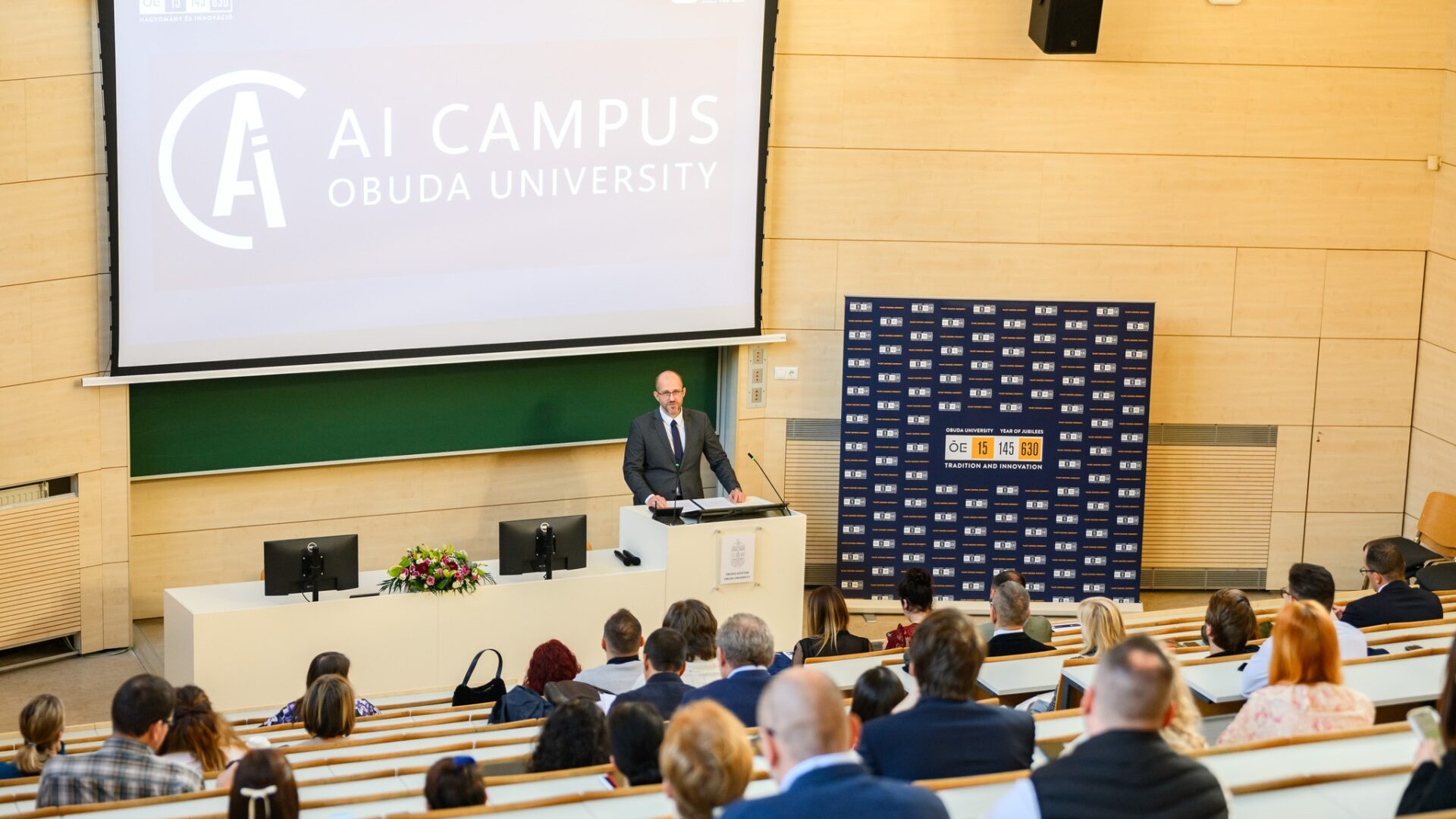
Nearly two years ago, at the Rector's request, we began planning the university-wide AI transition. From the very beginning, our goal was not just to create a strategy, but to design a roadmap for an 'AI-ready university' and to launch its initial steps. The mission of the AI Campus is not merely to teach the technology, but to drive a complete organizational transformation—we aim to integrate artificial intelligence across all areas, from education and research to administration. This is a unique initiative where we follow the principle of 'testing first, then regulating.' By now, we have reached a point where, in addition to establishing ethical guidelines, the first chapter of university-level regulation has also been drafted. This programme is the result of teamwork. The IT Office, the University Research and Innovation Centre, the University Digital Learning Materials Office, and the Directorate General for Education have all contributed immensely to it, but naturally, many other organizational units are also facilitating this work.
How are staff members responding to the changes brought about by the introduction of AI tools? For instance, how popular are the 'Lunch and Learn' type programmes?
The reception is varied. There are those who are still looking for points of connection, but I am confident that practical examples will convince them. This year, we are preparing for an important step: we are opening up the introductory AI training—originally intended for students—to all of our employees. I trust that once they see how this technology can ease their day-to-day work, more people will discover the opportunities inherent within it.
The faculty is famous for its practice-oriented education. At what pace are you able to adapt the curricula to rapidly changing market demands?
This is a major challenge, as technology changes faster than traditional subject structures. However, the value of our degree stems precisely from the fact that we provide not only technical knowledge, but also a complex mindset and a critical approach. In the world of AI, the capacity for system-level oversight and quality control becomes even more critical, because the machine can easily mislead the user.
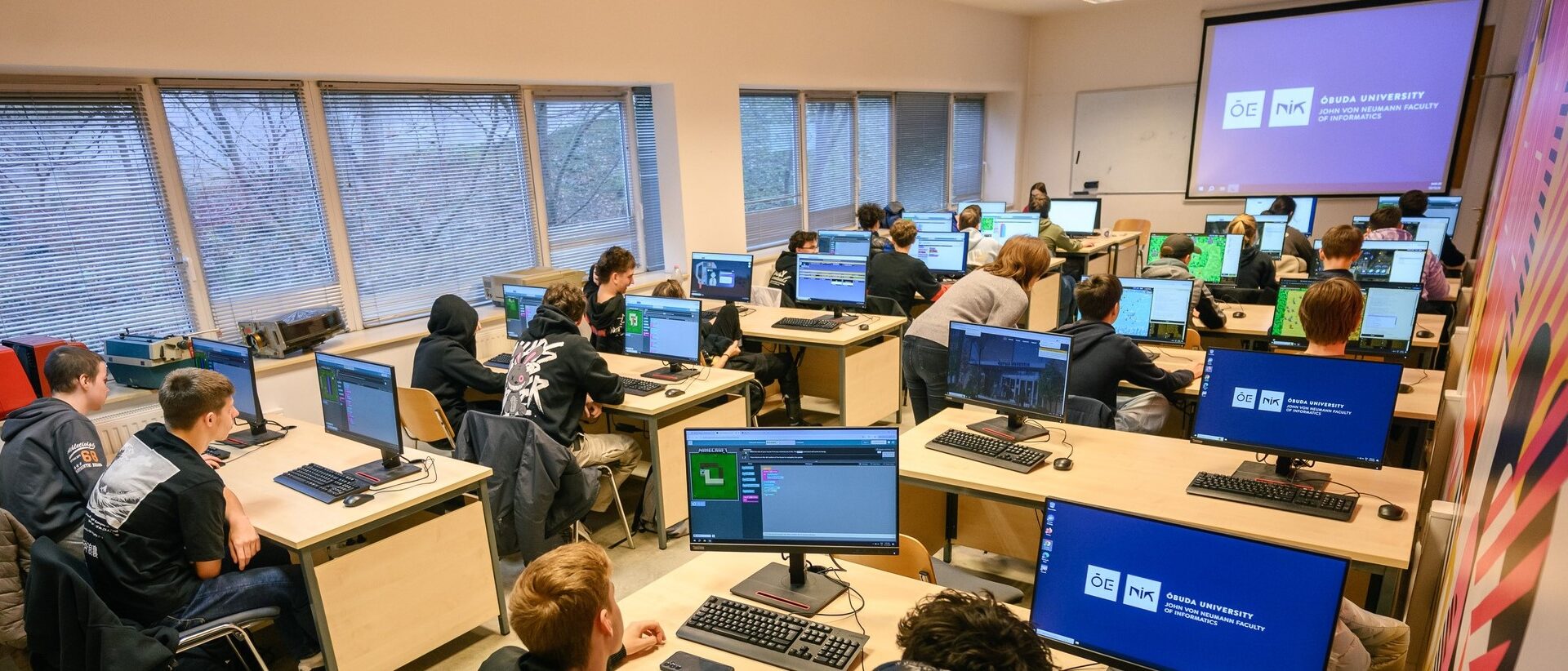
Companies expect us to graduate highly qualified professionals who are already well-versed in practical applications. This is extremely difficult, and we are currently looking for solutions. We support this practical approach through active partnership management.
We currently operate four industrial chairs, and together with the Óbuda University Nonprofit Ltd., we have established a new university platform called ÓE HUB. This platform is capable of supporting the organization of the entire university life, while simultaneously functioning as its own job board and alumni portal, and it already features AI capabilities. As an example, students can even generate CVs with AI assistance, while companies can reach our talent directly, yet in a controlled manner that aligns with the university's business interests.
To what extent is it typical that companies want to recruit students straight from the classroom?
If I had to answer in one word: immensely. This is the momentum we must sustain through our developments. By the time our students reach their master's studies, almost without exception, everyone is working. According to a previous survey of ours, as many as 60 per cent of our bachelor's students are already employed.
How, and to what extent, does AI specifically appear in the curriculum?
I consider it a baseline that students must learn to collaborate with AI agents. They need to know how to give precise prompts, set systems of expectations, and verify the machine's output. AI democratises education, making knowledge accessible at a low cost; however, students must invest active energy to ensure they don't just ask questions, but truly learn from the interaction.
We are also developing our own exam evaluation systems and course-specific chatbots—for instance, the YOLO AI platform can be utilised for this purpose. Furthermore, we have developed an AI-supported methodology for curriculum design, ensuring that engineering knowledge reaches Generation Z in a format that is digestible from a pedagogical perspective.
Speaking of AI, do you have any fears regarding artificial intelligence? Could it take control over us?
I am more concerned about social segregation than a robot rebellion. I fear that a gap will widen between those who have the resources to access premium systems, education, and learning, and those who lack these resources. My concern is not mass unemployment, but rather the forced necessity for retraining. Both society and individuals should be preparing for this shift much more consciously. This is not the future; it is the present. The labour market is undergoing a dramatic transformation.
Returning to the topic of training: to what extent are students able to gain international experience?
Great progress can be seen in this area as well, especially at the university level, which every faculty and student can leverage. The university's leadership has worked tremendously hard to expand our international network. Since most of our students work, short-cycle mobilities have become more popular instead of the traditional, semester-long programmes. Last year, for instance, we sent students to China and Nepal for intensive, one- to two-week training programmes. The combination of exotic locations and rapid knowledge acquisition is highly attractive to them.

During our conversations, several deans at our university have highlighted that the Covid pandemic fundamentally changed student habits. How do you see the community in the current period?
Turning toward the digital world is naturally inherent to IT students, but generally speaking, it is even more noticeable now: due to generational traits and the lingering memory of the pandemic, students have become even more introverted. We do not want to leave anyone behind, and we are trying to address this phenomenon, for instance, by developing soft skills.
We have introduced an entire curricular pathway for this purpose. In the first semester, we teach learning methodologies, and in the second, we prepare our students for roles such as student demonstrators, live coaches, and peer tutors, among others. Fortunately, we still encounter plenty of independent initiatives. It is heartwarming to see IT students step out of their comfort zones; they have already organized a book club, pizza afternoons, and even visited a nursing home to volunteer. We strive to provide every opportunity to ensure there is a welcoming space for student initiatives.
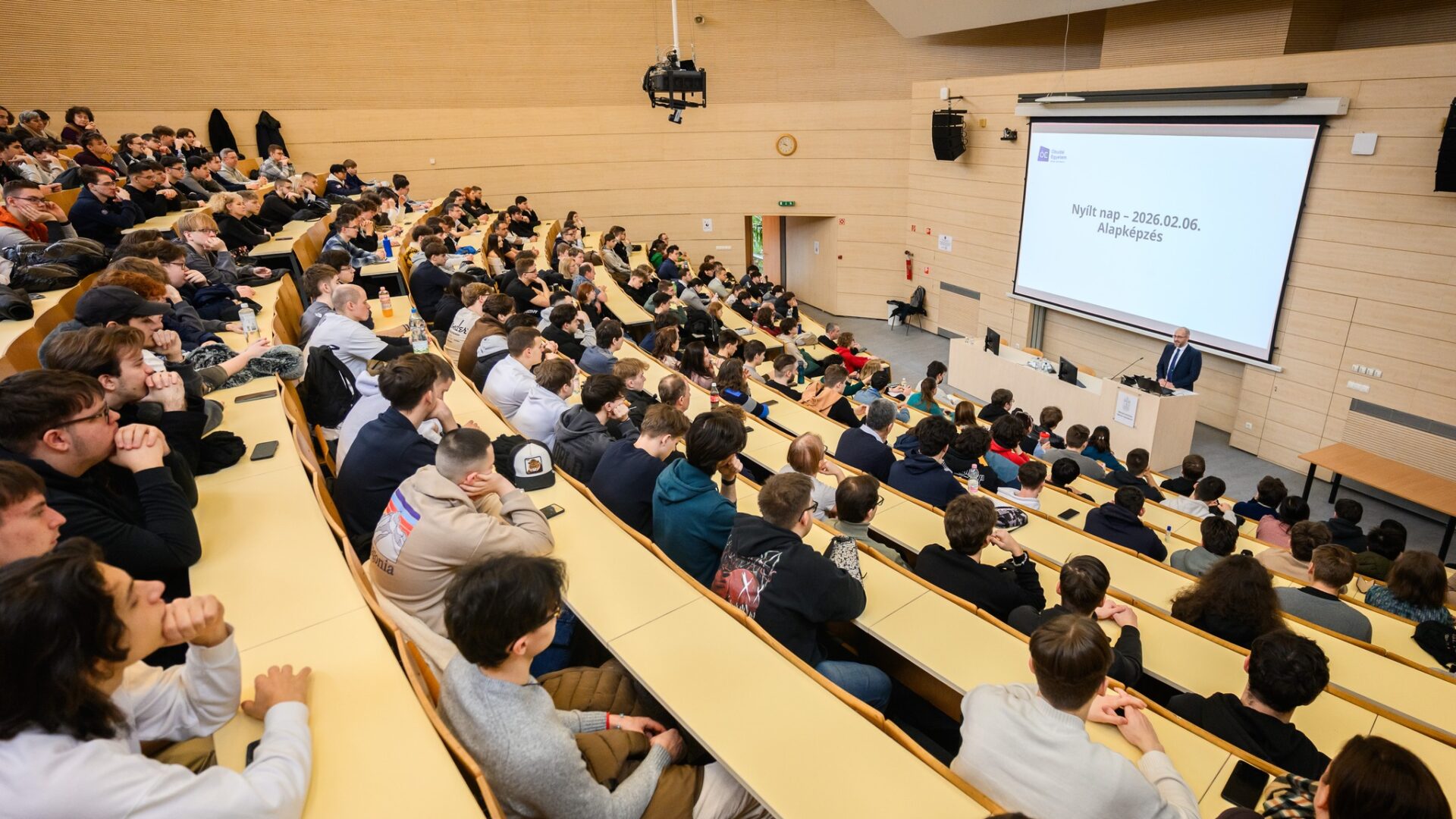
What message do you have for prospective students? Why should they choose the Neumann Faculty?
First and foremost, because our market feedback is outstanding on a national level. Here, a practice-oriented approach is a top priority. Right from their first semester, students spend a high number of hours working in laboratories. We focus on current, cutting-edge topics and offer international networks that are unavailable elsewhere. Anyone who graduates from our faculty can find employment immediately upon receiving their degree, and according to statistics, they can expect one of the highest starting salaries on the engineering market.
One important question remains: if the Zsámbék Science and Innovation Park is successfully realized, what could be the significance of this investment?
The realization of the Science Park is one of the keys to our future. It is not primarily about the physical space—although that is also very important—but rather about the mindset. It can encompass a much more intensive, more integrated collaboration with companies. In addition, it brings a business perspective, legal knowledge, and an innovation-focused approach. Our goal is to ensure that the research conducted here turns into real market products and software, and for this, we need professionals who understand industrial logic alongside technology. We consider it of paramount importance that the engineers of the future possess these skills.
Csilla Szeberényi