

Medieval Universities
In the Central European region, the first known university was established in Prague in 1348. This was followed by the founding of the universities in Krakow (1364) and Vienna (1365). The first university in Hungary was founded in 1367 in Pécs by King Louis the Great of Hungary.
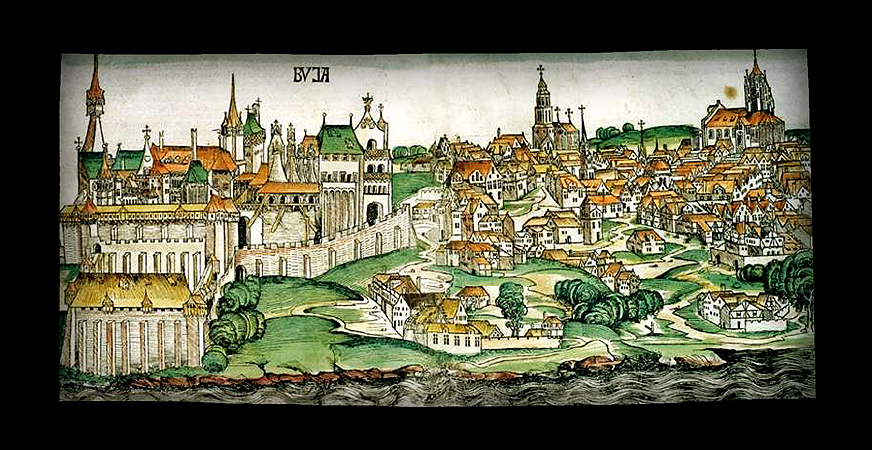
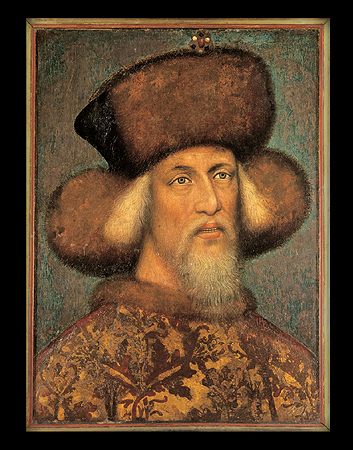
Budapest—medieval Obuda, Buda, and Pest—has always played a decisive role in the country’s economic life and educational system. In addition to religious and secular primary and secondary schools, a higher education institution also operated in Obuda from the 12th century, meeting the standards and demands of the time. On October 6, 1395, Pope Boniface IX issued the first founding charter of the University of Obuda at the request of King Sigismund of Luxembourg. It became the second university in the country and the first in the capital.
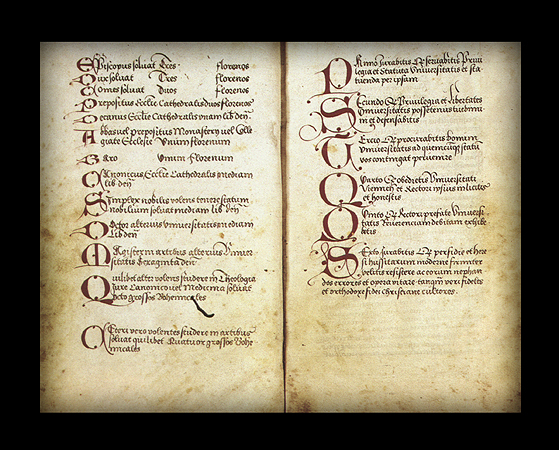
The founding charter of the Universitas Budensis, which consisted of four faculties, has not survived. The papal bull allocated the income of the Buda provostry to support the university. After a short period of operation, the institution likely closed its doors in 1403 due to internal conflicts of the time.
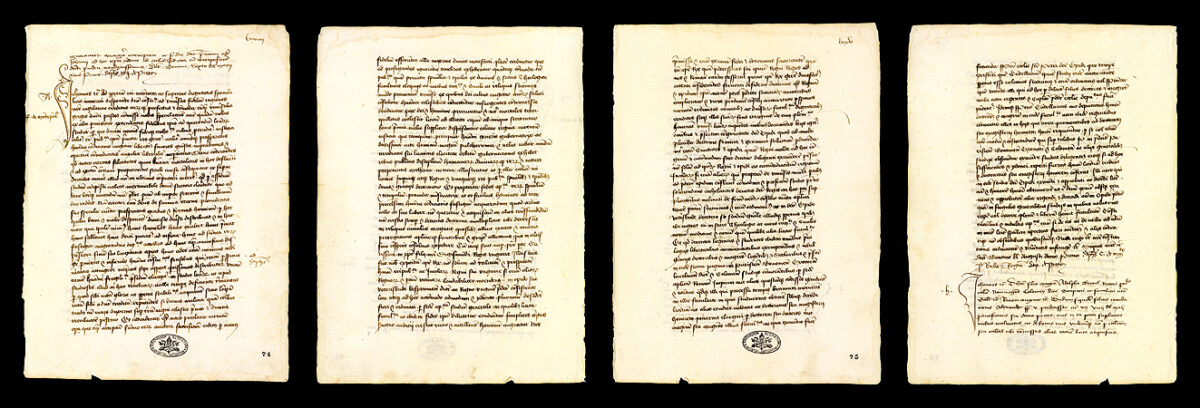
After resolving internal disputes and settling his relations with the Papacy, King Sigismund saw the need to re-establish a Hungarian university under his direct influence. At his request, on August 1, 1410, the Pope signed a bull for the re-establishment of the University of Obuda. The university operated with four classical faculties—sacred theology, canon and civil law, medicine, and the liberal arts—and enjoyed all the privileges of major European universities, such as those in Paris, Bologna, Oxford, and Cologne. The papal bull survives as a copy in the Vatican Secret Archives. The Hungarian translation of the papal bull was revised by Prof. Dr. Géza Érszegi, taking earlier editions into account.
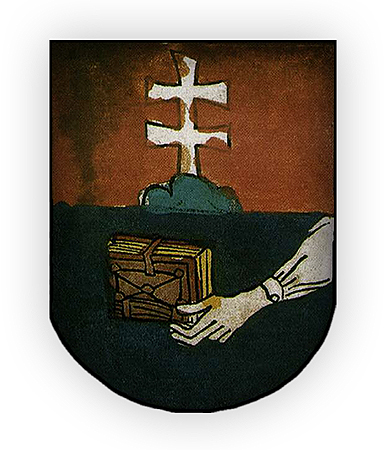
Thanks to Ulrich von Richental, the coat of arms of the University of Obuda, the Studium generale, is known. Several old manuscripts and early printed editions of Richental’s chronicle have been published. The most well-known version is the one printed in Augsburg in 1483. The coat of arms on the divided shield shows, in the upper red field, a silver double cross resting on a green triple hill; in the lower blue field, an arm in a silver sleeve extends from the left, holding a clasped, brown-bound book with golden-edged pages. According to tradition, the book symbolized grammar, wisdom, and fame, though it has also been identified as the university’s register, its book of privileges, or even the Bible. In a figurative sense, it could still represent the textbook, a symbol of wisdom, learning, and knowledge.
After the closure of the University of Obuda, no university operated for several centuries within the area of present-day Budapest. King Matthias attempted to establish a university in Bratislava. The capital only had a university again when Archbishop Péter Pázmány founded an institution in Trnava in 1635, which was relocated to Buda in 1777 by Queen Maria Theresa.
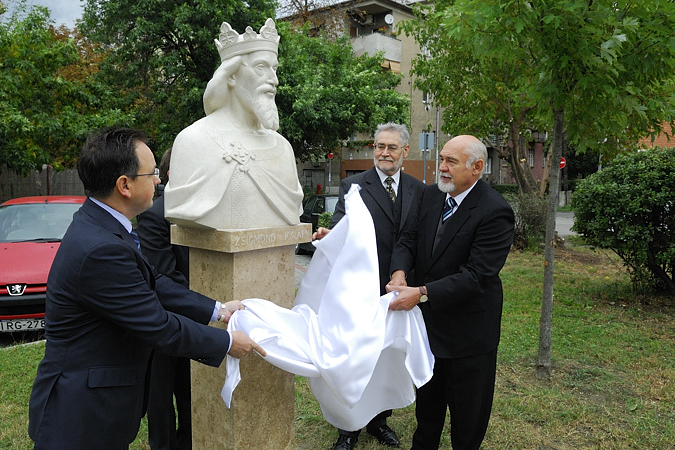
To commemorate the 600th anniversary of the 1410 re-establishment of the University of Obuda, the modern Obuda University, in cooperation with King Sigismund College and the Municipality of Obuda-Békásmegyer, erected a statue of King Sigismund in the University Park opposite the central building of the university. The artwork was created at the University of Fine Arts by sculptor Katalin Csányi.